
Last updated: September 2026
A sewer line problem often gives warning signs before it becomes a full sewage backup. The challenge is that some of those signs can also come from an ordinary fixture clog, so one symptom alone doesn’t mean the buried sewer line has failed. The pattern matters. A single slow sink may point to a local clog. Slow drains, gurgling, or backups across several fixtures, especially toilets, tubs, showers, or lower-level drains, are a stronger reason to suspect the main sewer line.
Quick Answer: Signs Your Sewer Line May Have a Problem
- Several drains are slow at the same time
- Toilets or drains gurgle when other fixtures are used
- Wastewater backs up into a tub, shower, toilet, or floor drain
- The same main-line clog keeps coming back
- Sewage odors, wet or sunken spots in the yard, or sewage outside
What to do: If sewage is backing up, limit water use and avoid contact with it. For recurring problems, a sewer camera inspection (often about $100 to $500) can show what’s actually wrong before you approve a major repair.
What Is the Home Sewer Line?
In homes connected to a municipal sewer system, wastewater from toilets, sinks, tubs, showers, and appliances leaves the house through a pipe that connects to the public sewer main. Depending on where you live, it may be called a sewer lateral, side sewer, or building sewer.
Who’s responsible for that pipe varies by local rules, but homeowners are commonly responsible for at least part of the line between the house and the public system. Before approving major work, check with your local sewer utility about where your responsibility ends.
9 Warning Signs of Sewer Line Problems
1. Several Drains Are Slow at the Same Time
One slow drain doesn’t necessarily point to a sewer problem. Hair, soap residue, or food debris can slow a single fixture. It’s more concerning when toilets, tubs, showers, or sinks in different parts of the house start draining slowly around the same time. A blockage farther downstream can affect multiple fixtures because they all feed into the same main line. If clearing one fixture doesn’t fix the broader pattern, it’s usually time to have the main line evaluated.
2. Toilets or Drains Gurgle Repeatedly
Gurgling happens when air is pushed or pulled through water in the plumbing. One occasional sound doesn’t diagnose anything, but repeated gurgling, especially when another fixture is used, can accompany a restriction. For example, a toilet may gurgle when the washing machine drains, or a tub may bubble when a toilet is flushed. EPA guidance lists gurgling plumbing as a warning sign of wastewater system trouble, though the exact cause still needs to be found.
3. Wastewater Backs Up Into a Tub, Shower, Toilet, or Floor Drain
A backup is one of the clearest signs that wastewater isn’t moving normally. When the sewer line is blocked, wastewater has nowhere to go and can come back up through the lowest fixture, such as a basement floor drain, first-floor tub, or shower.
Don’t keep running water to “test” the problem. Extra flushing, laundry, showers, or dishwasher use sends more water into a line that may already be blocked.
4. You Notice a Sewage Odor Inside or Outside
A persistent sewer odor deserves attention, but smell alone doesn’t prove the pipe is broken. Dry drain traps, vent problems, and other issues can cause sewer-gas smells too. When odor shows up together with slow drains, gurgling, backups, or wet areas outside, it becomes a more meaningful part of the pattern.
5. The Same Main-Drain Clog Keeps Coming Back
A one-time blockage can often be cleared without finding structural damage. Repeated main-line clogs are different. If the sewer has been cleaned and backs up again, ask what’s causing it. Roots, damaged pipe, offset joints, grease buildup, or a sagging or collapsed section can cause problems that cleaning alone won’t permanently fix.
6. Trees or Large Roots Are Near the Sewer Line
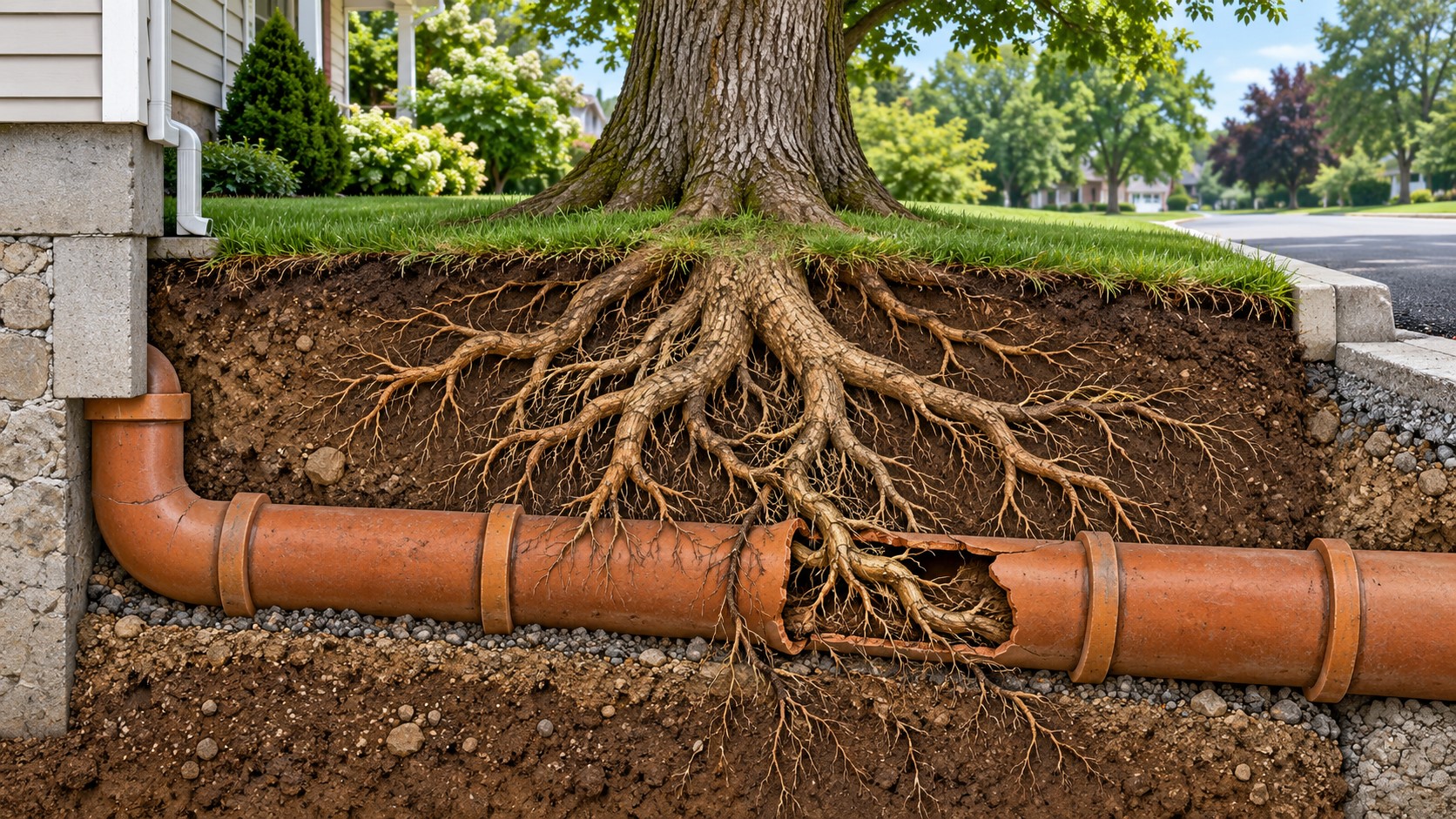
Tree roots don’t automatically damage every nearby sewer line, but they can enter through cracks, joints, or other openings in a defective pipe. The EPA identifies root intrusion through sewer defects as one cause of blockages. The key question isn’t whether a tree is nearby. It’s whether roots have actually gotten into the pipe. A camera inspection can show that.
7. A Wet, Sunken, or Soft Area in the Yard
A damaged sewer line can leak wastewater into the surrounding soil. You might notice a persistently damp area, soft ground, settling, or a depression along the sewer line’s path. Not every wet spot is a sewer leak. Irrigation, stormwater, a water-supply leak, or drainage problems can look similar. But a new wet or sunken area combined with odors or indoor drain problems deserves a professional look.
8. A Patch of Grass Grows Differently
Unusually green or fast-growing grass over a wastewater line can sometimes accompany a leak, since wastewater adds moisture and nutrients. This sign is more common with septic systems and is weak evidence on its own. Treat it as a supporting clue, not a diagnosis.
9. You See or Smell Sewage Outside
Visible wastewater on the ground, or sewage coming from a cleanout or low area, needs prompt attention. Sewage can contain bacteria, viruses, and other disease-causing organisms. Keep children and pets away, avoid contact, and contact a qualified plumber or your local utility. If you’re not sure whether the problem is on your line or the public main, your utility may be able to help figure out which side is affected.
Local Drain Clog or Main Sewer Problem?

This pattern can help you judge what’s more likely. It isn’t a substitute for an inspection.
| What You’re Seeing | What It May Point To |
|---|---|
| One fixture is slow or blocked | A local clog in that fixture or branch drain is often more likely |
| Several fixtures are slow or gurgling | A blockage in the main drain or sewer line becomes more likely |
| Water comes up in a lower drain when another fixture is used | A downstream blockage that needs prompt evaluation |
| The main line has needed repeated cleaning | Possible roots, structural damage, or another recurring cause |
| Neighbors have backups at the same time | Possibly a public sewer problem; contact your local utility too |
What Causes Sewer Line Problems?
Warning signs tell you something may be wrong, not exactly why. Common causes include grease or debris buildup, items that shouldn’t have been flushed, root intrusion through pipe defects, separated or offset joints, cracks, corrosion in some older pipes, pipe deformation, or a collapsed section. Ground movement, age, poor original installation, and nearby construction can also play a role. The cause matters: a clog that can be cleaned is very different from a failed pipe that needs repair or replacement.
How a Sewer Line Problem Is Confirmed
A plumber or sewer contractor will usually start by figuring out whether the blockage is in one fixture, a larger drain inside the house, or the sewer lateral. From there, a video camera inspection is the most common way to see inside the line. Seattle Public Utilities specifically recommends hiring a plumber or sewer inspector who can run a camera through the line, and DC Water notes that a TV inspection can help determine whether a lateral is clogged or collapsed.
A camera can reveal roots, debris, breaks, holes, displaced joints, or sags, and help locate the problem so repair discussions are based on something more specific than “the sewer keeps clogging.”
What Might Sewer Line Repairs Cost?
The fix, and the price, depends on what the inspection finds. These national ranges from HomeGuide and Angi can help you understand what you may be quoted:
| Service | Typical Cost |
|---|---|
| Sewer camera inspection | $100 – $500 |
| Snaking / clearing a main line clog | $150 – $600 |
| Hydro jetting | $250 – $800 |
| Root removal | $100 – $600 |
| Spot repair of a cracked section | $600 – $1,050 |
| Sewer line replacement | $50 – $250 per linear foot |
National planning figures. Depth, access, and restoration can change costs significantly.
Many problems are clogs that can be cleared for a few hundred dollars. Structural damage that needs a section or the whole line replaced can cost thousands. For a full breakdown of replacement methods and prices, see our guide to sewer line replacement cost.
Facing a Sewer Repair Quote?
Our free Before You Hire Home Repair Cost Checklist helps you compare plumbing and sewer estimates, spot missing items like restoration and permits, and ask the right questions before you sign.
Questions to Ask After a Sewer Camera Inspection
- Can you show me the part of the video where the problem appears?
- What exactly do you see: roots, grease, a crack, a hole, an offset joint, a sag, or a collapse?
- Where is the problem relative to the house, property line, and public sewer?
- Will cleaning likely solve it, or is there structural damage that needs repair?
- Can just the damaged section be repaired, or are you recommending a longer replacement? Why?
- Are trenchless methods possible here, or would digging be required?
- What restoration work is included if digging is needed?
- Do local permits or utility coordination apply?
When to Treat It as Urgent
Get prompt help, rather than continuing to use your plumbing normally, when:
- Raw sewage is backing up into the house
- Several fixtures suddenly stop draining
- Wastewater is surfacing outside
- A lower-level drain backs up whenever water is used elsewhere
- A strong sewage odor comes with active drainage problems
- The backup is near electrical equipment or creates another safety concern
Safety note: Avoid direct contact with sewage. The EPA notes that untreated sewage can
carry harmful pathogens, and many utilities recommend limiting water use during an active backup so you don’t send more
wastewater into a blocked line.
What Not to Assume
- Not every slow drain means you need a new sewer line. Many drainage problems are clogs that can be cleared.
- Repeated cleaning doesn’t prove the pipe is healthy. If problems keep returning, ask whether the underlying cause has been found.
- Don’t approve a major replacement based on a vague “the pipe is bad.” Ask what was found, where, and why the recommended repair fits.
Does Homeowners Insurance Cover Sewer Line Problems?
Often, no. Standard homeowners policies typically don’t cover sewer line damage from age, wear and tear, or tree roots. Some insurers offer optional service line coverage for buried lines, and separate sewer backup coverage may help with damage inside your home from a backup, though usually not the pipe repair itself. Check your policy or ask your agent.
Sewer Line Problems: Frequently Asked Questions
How do I know if it’s a clog or a broken sewer line?
A single slow fixture usually points to a local clog. Multiple slow drains, backups in low drains, or clogs that keep returning suggest a main line issue. A camera inspection is the most reliable way to tell a clog from structural damage.
Can I use chemical drain cleaner for a sewer line clog?
Chemical cleaners are aimed at small fixture clogs and are unlikely to clear a main sewer line blockage. If several drains are affected, it’s better to have a professional evaluate the main line.
Why does my toilet gurgle when the washing machine drains?
That can happen when air is forced through the plumbing because water can’t flow freely downstream. It may point to a restriction in a shared drain or the sewer line, or a venting issue. A plumber can determine which.
Who do I call for a sewer line problem?
Start with a licensed plumber or sewer contractor who can clear the line and perform a camera inspection. If neighbors are having backups too, contact your local sewer utility as well.
The Bottom Line
The strongest warning signs of a sewer line problem are usually patterns: multiple slow drains, recurring main-line clogs, gurgling across fixtures, sewage backups, or signs of wastewater outside. Those symptoms don’t automatically mean the whole line needs replacing. They mean the system should be evaluated so the real cause can be found.
If sewage is backing into your home, reduce water use, avoid contact, and get professional help promptly. If the problem is recurring rather than urgent, a camera inspection gives you solid evidence before you make a major repair decision.
Get the Free Before You Hire Checklist
Download our free Before You Hire Home Repair Cost Checklist. Use it to compare sewer and plumbing quotes and avoid costly surprises.
Sources
- Seattle Public Utilities: Side Sewer Maintenance
- Seattle Public Utilities: Side Sewer Defects & Issues
- DC Water: Know What to Do if You Have a Sewer Backup
- U.S. EPA: Sanitary Sewer Overflow Frequent Questions
- U.S. EPA: Resolving Septic System Malfunctions
- Austin Water: Private Lateral Program
- HomeGuide: Sewer Line Repair Cost
- Angi: Sewer Line Replacement Cost (2026 Data)
House Care
Compass provides general educational information to help homeowners better understand repair and replacement decisions.
It does not diagnose specific problems. For advice about your specific home or project, consult an appropriately qualified
professional.