AC Condenser Replacement Cost: What Homeowners Should Know
Last updated: September 2026
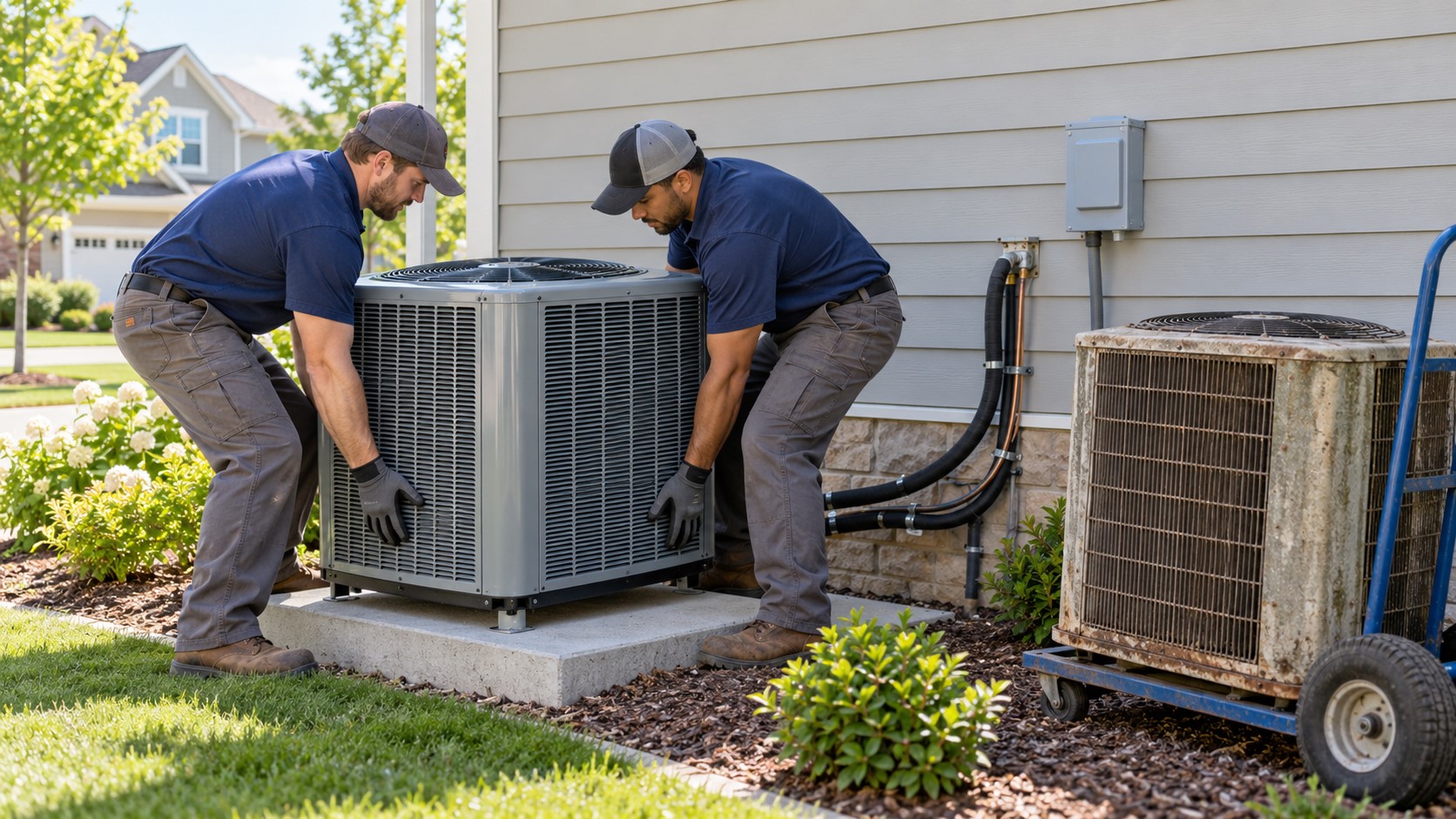
When an HVAC technician says the condenser needs replacing, the price can sound close enough to a whole new system that it raises an obvious question: should you replace the outdoor unit, repair one part, or replace more of the AC system? This guide covers current costs, what drives the price, and how to decide.
Quick Answer: How Much Does AC Condenser Replacement Cost?
- Full outdoor condensing unit: roughly $1,300 to $6,100 installed, with a national average around $2,900 (Angi, 2026). Many homeowners pay about $2,500 to $5,000.
- Condenser coil only: often about $800 to $3,000.
- Under warranty: you may pay mainly labor and related charges, roughly $300 to $1,200 (HomeGuide).
- Biggest cost drivers: system size, efficiency, warranty status, compatibility with your indoor coil, refrigerant, electrical or line-set changes, and local labor.
- These are national planning figures. A diagnosis and written quote for your system can differ significantly.
What Is the AC Condenser?
In a typical split central air system, the outdoor unit is often called the condenser or condensing unit. Its job is to release outdoors the heat your system removed from inside the house.
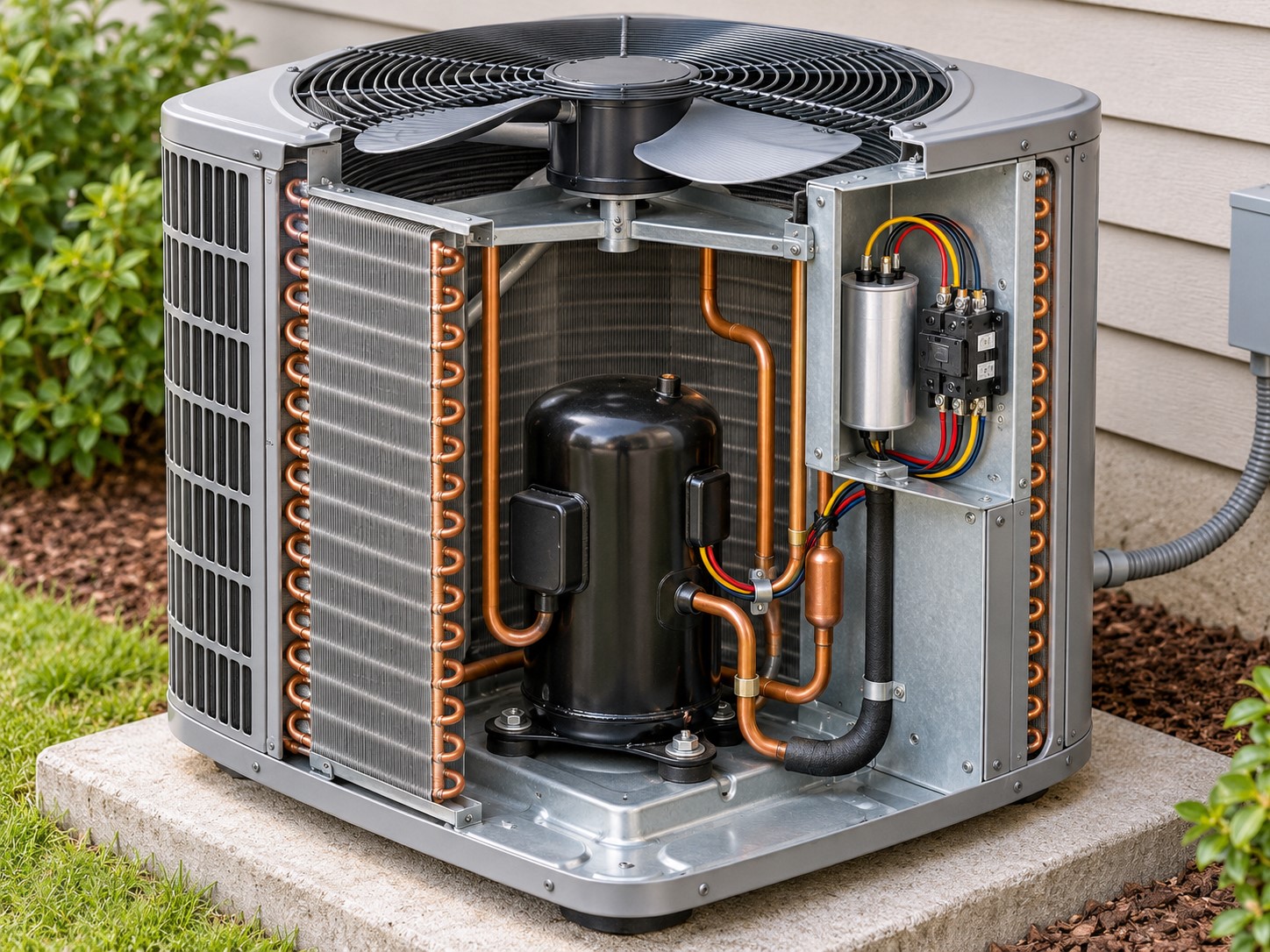
The outdoor unit contains the condenser coil and usually also houses the compressor, fan, fan motor, capacitor, contactor, and other controls. The condenser coil and the compressor are different parts, even though both sit in the same cabinet. That matters, because replacing one failed part can cost much less than replacing the entire outdoor unit.
How Much Does AC Condenser Replacement Cost?
Angi’s 2026 data places full AC condenser replacement at about $1,300 to $6,100, with a national average near $2,900. HomeAdvisor reports that most homeowners pay roughly $2,500 to $5,000, also averaging about $2,900. HomeGuide lists about $1,200 to $4,200 for many out-of-warranty replacements and roughly $300 to $1,200 when the equipment is under warranty. The figures differ because each guide uses different project samples and assumptions.
AC Condenser Replacement Cost by Size
| AC System Size | Estimated Installed Cost |
|---|---|
| 1.5 tons | $1,300 – $2,200 |
| 2 tons | $1,350 – $2,500 |
| 3 tons | $1,850 – $3,000 |
| 5 tons | $2,150 – $5,000 |
Source: Angi 2026 national cost data (materials and labor). Higher-efficiency or variable-speed units cost more.
Use these numbers as a budget, not a quote. A basic 1.5-ton single-stage unit is a very different project from a 5-ton high-efficiency system that needs electrical or refrigerant-line changes.
Condenser Coil vs. Full Condensing Unit vs. Other Parts
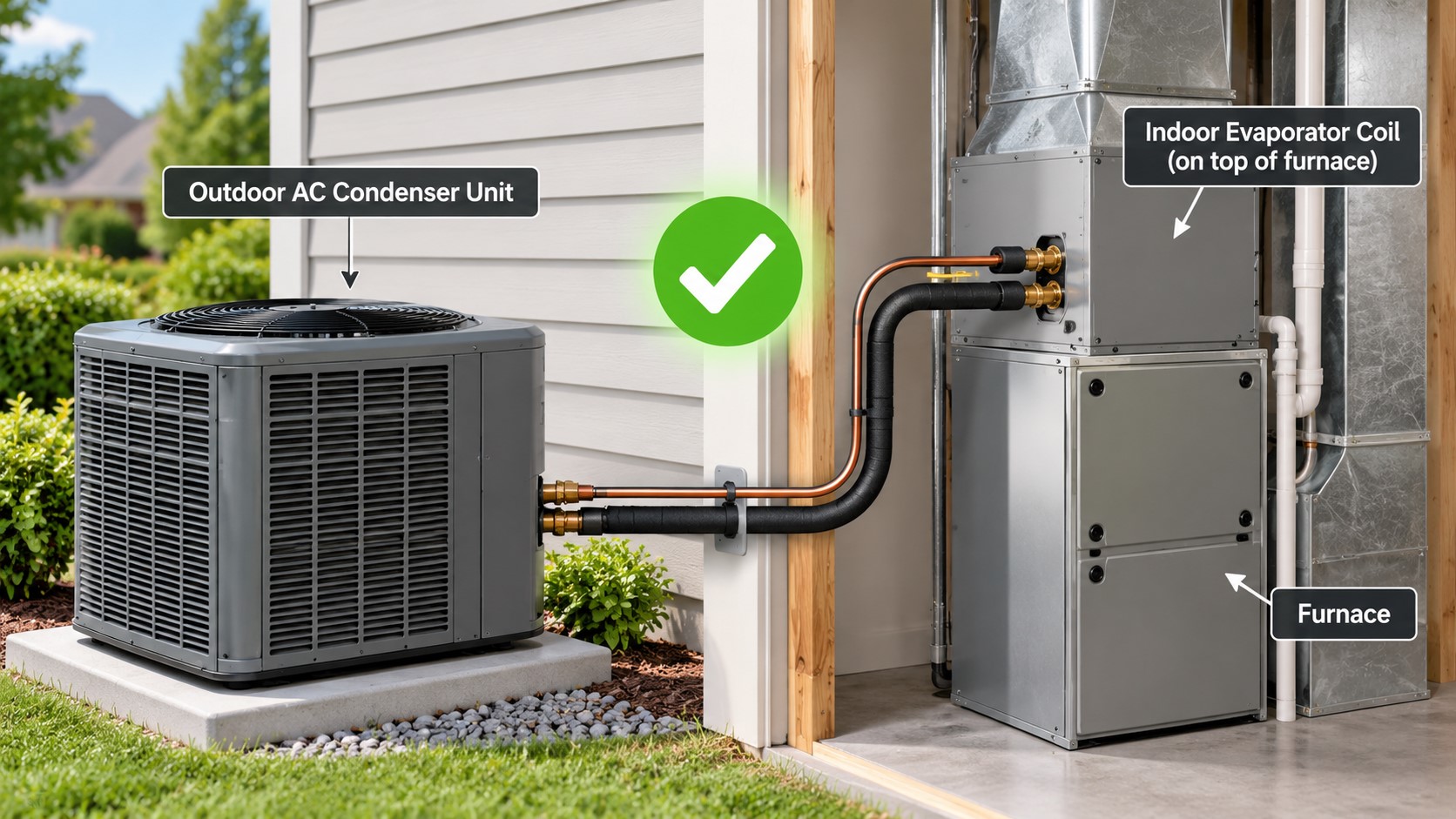
A quote to replace the condenser coil isn’t the same as a quote to replace the whole outdoor unit. And many outdoor-unit problems come from smaller parts. Here’s how typical costs compare:
| Repair | Typical Cost |
|---|---|
| Capacitor replacement | $100 – $400 |
| Condenser coil replacement | $800 – $3,000 |
| Compressor replacement | $800 – $2,300+ |
| Full outdoor condensing unit | $1,300 – $6,100 |
Source: Angi 2026 national cost data. For compressor-specific pricing, which varies more widely by guide, see our AC compressor replacement cost guide.
If the coil is the only failed part and the rest of the outdoor unit is in good shape, a coil replacement may be an option. But if the compressor, fan, cabinet, or controls are also worn, or the equipment is older, replacing the whole outdoor unit may make more financial sense. That’s a diagnosis and comparison question the coil price alone can’t answer.
What Makes AC Condenser Replacement More Expensive?
- System size (tonnage): larger equipment costs more. The right size should match your home’s cooling needs and your indoor equipment.
- Efficiency (SEER2): higher-efficiency condensers cost more upfront and may need compatible indoor equipment or controls to reach their rated efficiency.
- Single-stage, two-stage, or variable-speed: more advanced equipment can cost substantially more and may need matched communicating controls.
- Warranty coverage: if the unit or a major part is still covered, you may mainly pay for labor, refrigerant, and materials.
- Refrigerant and compatibility: the new outdoor unit must work with the refrigerant and components in your existing system, which matters more during the shift away from R-410A.
- Electrical work: a new disconnect, breaker, wiring, or surge protection may be needed.
- Refrigerant lines: the existing line set may be reused, flushed, modified, or replaced.
- Labor and permits: Angi notes most jobs take about 3 to 6 hours, and permits may run roughly $250 to $400 depending on your area.
Comparing AC Repair Quotes?
Our free Before You Hire Home Repair Cost Checklist helps you line up estimates side by side, spot missing line items, and ask the right questions before you sign.
Can You Replace Just the Outdoor Condenser?
Sometimes, but the new unit has to work correctly with your indoor coil and the rest of the system. Manufacturers often recommend matched indoor and outdoor equipment because the pairing affects capacity, efficiency, refrigerant control, and warranty eligibility. A new outdoor unit paired with an incompatible indoor coil can cause performance problems and may not reach its advertised efficiency.
If a contractor recommends replacing only the condenser, ask: “How will this outdoor unit be matched to my existing indoor coil, and is the combination an approved or rated match?”
What the 2026 Refrigerant Rules Mean for Condenser Replacement
The refrigerant transition has caused a lot of confusion for homeowners with R-410A systems. EPA guidance says existing residential AC systems can continue to be used and repaired throughout their useful life, including replacing a major component such as a condensing unit or compressor. R-410A components can still be made and sold for servicing existing systems.
So a failed R-410A condenser doesn’t automatically force you to replace the whole system. However, if both the outdoor unit and the indoor coil are replaced together, the project can be treated as a new system under EPA rules, which can affect the options a contractor offers. In May 2026, the EPA also revised the rules so qualifying older inventory can continue to be installed until it runs out. The practical takeaway: ask exactly what refrigerant and equipment generation you’re being quoted.
Repair One Part or Replace the Condenser?
A condensing unit has several serviceable parts. A failed capacitor, contactor, fan motor, or even compressor doesn’t always require replacing the whole outdoor unit. A capacitor replacement, for example, often runs about $100 to $400, far less than a new condenser.
The decision changes when several expensive parts are failing, the unit is badly corroded, parts are hard to get, the equipment is near the end of its life, or the indoor equipment is also in poor shape. Ask the technician to identify the failed part and explain why repairing it is or isn’t practical before approving a full replacement.
Replace the Condenser or the Whole AC System?
This is often the most important financial question in the estimate.
Replacing only the outdoor unit can make sense when:
- The indoor coil and furnace or air handler are relatively new, compatible, and in good condition.
- Warranty coverage significantly lowers the condenser cost.
A full system replacement deserves a look when:
- The indoor coil or furnace/air handler is also old.
- The new outdoor unit can’t be properly matched to the existing indoor equipment.
- The system has a history of costly repairs.
- The price gap between condenser-only and a complete replacement is relatively small.
Many standard-to-midrange central AC replacements run about $5,000 to $12,500. See our guide to AC replacement cost for the full breakdown. Don’t compare a condenser-only quote with a whole-system quote as if they’re competing prices for the same job. Compare what’s being replaced, what stays, the warranties, the efficiency, and the likely condition of the equipment you keep.
Questions to Ask Before Replacing an AC Condenser
- Which part actually failed: the condenser coil, compressor, fan, or the whole outdoor unit?
- Can the failed part be repaired or replaced on its own?
- What is the model and tonnage of the proposed outdoor unit?
- Is it properly matched to my existing indoor coil and furnace or air handler?
- What refrigerant does my current system use, and what does the replacement use?
- Are you quoting a repair part for my existing system, or a new-system replacement?
- Is any of the equipment still under a manufacturer warranty?
- Does the quote include refrigerant work, line-set work, electrical changes, permits, startup, and disposal?
- What parts and labor warranties apply?
- If I replaced the whole AC system instead, what would the extra cost get me in age, efficiency, and warranty?
How to Compare Condenser Replacement Estimates
Two condenser quotes can differ by thousands of dollars without either being wrong. One contractor may be quoting a basic single-stage unit that works with your existing indoor coil. Another may include higher-efficiency equipment, a new indoor coil, electrical upgrades, a new line set, or a broader system replacement. Compare model numbers, capacity, SEER2 rating, refrigerant, which equipment is being replaced, warranties, labor, permits, and any electrical or refrigerant-line work.
If you’re considering high-efficiency equipment, note that the federal 25C tax credit ended for equipment installed after 2025, but your utility may still offer rebates. Ask your contractor which rebates the proposed unit qualifies for.
AC Condenser Replacement: Frequently Asked Questions
What’s the difference between the condenser and the compressor?
The condenser (or condensing unit) is the whole outdoor unit. The compressor is one part inside it that pressurizes the refrigerant. A compressor can often be replaced without replacing the entire condenser.
How long does it take to replace an AC condenser?
Angi notes most condenser replacements take about 3 to 6 hours. Waiting for equipment, permits, or electrical changes can add time.
How long does an AC condenser last?
Central AC equipment typically lasts roughly 10 to 20 years depending on climate, maintenance, and installation quality. Coastal salt air and heavy use can shorten that.
Can I replace an AC condenser myself?
No. Replacing a condenser involves handling refrigerant, which requires EPA Section 608 certification, plus high-voltage electrical work. Hire a licensed HVAC contractor.
The Bottom Line on AC Condenser Replacement Cost
For budgeting, roughly $1,300 to $6,100 is a reasonable national range for many full condensing-unit replacements, with a national average around $2,900. A coil-only or smaller component repair may cost much less.
The best decision comes from identifying what actually failed, then comparing the condenser-only option against the condition, compatibility, age, and warranty status of the rest of your system. If your system uses R-410A, current EPA rules still allow repairs, including replacing the condensing unit, so a condenser failure doesn’t automatically mean you need an entirely new system.
Get the Free Before You Hire Checklist
Download our free Before You Hire Home Repair Cost Checklist. Use it to compare HVAC quotes, catch missing line items, and decide with confidence.
Sources
- Angi: How Much Does It Cost to Replace an AC Condenser? (2026 Data)
- HomeAdvisor: AC Condenser Replacement Cost
- HomeGuide: AC Condenser Replacement Cost
- Carrier: Understanding Your AC Condenser Unit
- Trane: AC Condenser Replacement Cost
- U.S. EPA: Frequent Questions on the Phasedown of HFCs
- U.S. EPA: Technology Transitions HFC Restrictions by Sector
House Care
Compass provides general educational information to help homeowners better understand repair and replacement decisions.
Cost figures are national planning estimates and will vary by location, home, and contractor. For advice about your
specific home or project, consult an appropriately qualified professional.