How Long Do Sewer Lines Last? Materials, Age, and Warning Signs

Last updated: September 2026
A buried sewer line can last for decades, but there’s no single age when every line suddenly needs replacing. The pipe material matters, and so do soil movement, tree roots, installation quality, slope, corrosion, and past repairs. For homeowners, age is a clue, not a diagnosis. An older line with good structure and flow may still have years left, while a newer one can fail early from roots, poor installation, or ground movement.
Quick Answer: How Long Do Sewer Lines Last?
- Orangeburg (fiber pipe): commonly cited around 30 to 50 years, the shortest-lived material.
- Clay: about 50 to 60 years on average, though sound clay pipe can last longer.
- Cast iron: roughly 50 to 100 years, depending on corrosion and conditions.
- PVC / ABS plastic: often 50 to 100+ years when properly installed.
- A lifespan estimate isn’t a replacement deadline. Recurring backups, roots, cracks, corrosion, sags, or collapse on a camera inspection matter more than age alone.
Typical Sewer Line Lifespan by Material
| Pipe Material | Typical Lifespan | Common Weak Points |
|---|---|---|
| Orangeburg (bituminized fiber) | About 30 – 50 years | Softens, flattens, blisters, and can collapse |
| Vitrified clay | About 50 – 60 years on average | Many joints that can separate, shift, or let roots in |
| Cast iron | About 50 – 100 years | Internal corrosion and scale; cracks or holes over time |
| PVC / ABS plastic | About 50 – 100+ years | Poor installation, settling, joint movement, physical damage |
Ranges compiled from Angi and HomeGuide national data and commonly cited industry estimates. Published figures vary, so treat these as planning ranges, not promises.
Unlike a water heater, a buried sewer line doesn’t come with a sticker telling you when to replace it. Different materials age differently, which is why these numbers are most useful for deciding how closely to watch your line, not when to replace it.
Orangeburg: Deserves Special Attention in Older Homes
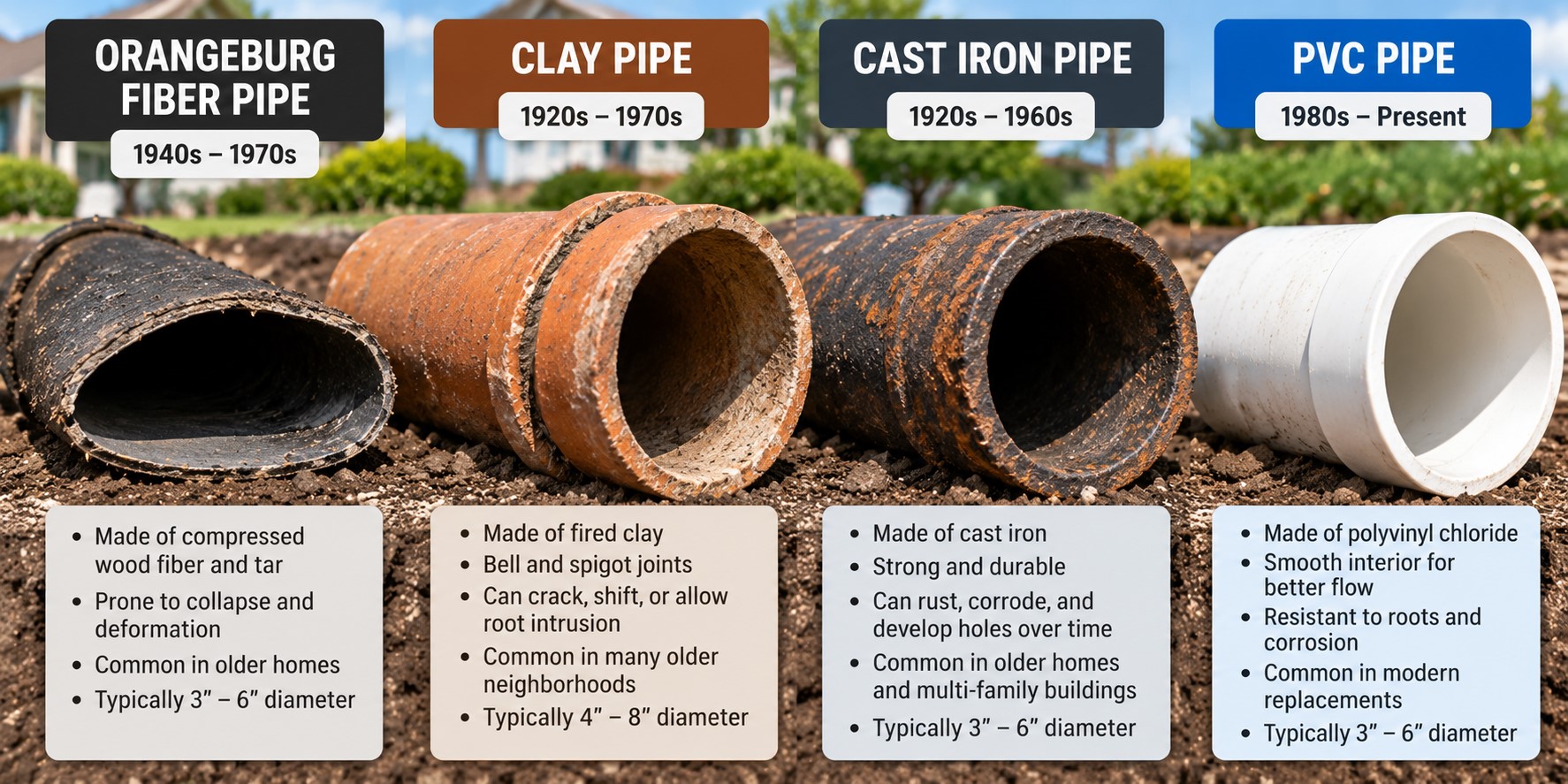
Orangeburg pipe was made from layers of wood fiber bonded with coal-tar pitch, and it was used in many mid-20th-century homes because it was cheap and lightweight. Because it isn’t rigid, it can lose its shape as it deteriorates. After a camera inspection, you may hear terms like ovaling, blistering, delamination, or collapse. If an older home still has its original Orangeburg line, its condition deserves a close look.
Clay: Durable Pipe, Vulnerable Joints
Vitrified clay doesn’t corrode like metal, but older clay lines were built from short sections with many joints. Seattle Public Utilities notes that older clay and concrete side sewers without watertight joints are especially vulnerable to tree roots. Clay is also brittle, so soil movement or settling can crack it or shift the joints. The better question isn’t how old the clay is, but what condition the joints are in today.
Cast Iron: Corrosion Matters More Than Age
Cast iron is strong, but buried cast iron eventually corrodes. Internal scale can narrow the pipe and catch debris, and advanced corrosion can weaken the walls, cause cracks or holes, or wear away the bottom of the pipe. Two cast iron lines of the same age can be in very different shape depending on soil, moisture, and past repairs.
PVC and ABS: Long-Lasting, But Not Failure-Proof
Plastic sewer pipe is lightweight, smooth inside, and doesn’t rust. Angi notes PVC can last around 100 years. But a young plastic line can still have problems from poor bedding, improper slope, settling, construction damage, or offset joints, even when the material itself has plenty of life left.
How to Find Out What Your Sewer Line Is Made Of
- Home age: older homes are more likely to have clay, cast iron, or Orangeburg, while newer homes usually have PVC or ABS. But lines are often partly replaced over the years.
- Past records: check your home inspection report, seller disclosures, or permit records for sewer work.
- The cleanout: a visible sewer cleanout pipe near the house may show the material of at least that section.
- A camera inspection: the most reliable way to see the material and condition along the whole line.
What Can Shorten a Sewer Line’s Life?
- Tree roots: roots enter through cracks and joints and can grow into blockages. The EPA identifies root intrusion through sewer defects as a cause of backups.
- Soil movement: shifting ground can crack rigid pipe, separate joints, or create sags where debris collects.
- Poor installation: inadequate support, alignment, or slope can cause problems long before a pipe’s expected lifespan.
- Corrosion: cast iron loses capacity and strength as it corrodes.
- Heavy loads or construction: vehicles, digging, or landscaping work can damage buried pipe.
- Grease and wipes: the EPA lists fats, oils, grease, wipes, and other flushed items as common causes of blockages.
- Existing defects: small cracks, offsets, or sags can worsen over time.
Facing a Sewer Repair Decision?
Our free Before You Hire Home Repair Cost Checklist helps you compare sewer estimates, spot missing items like restoration and permits, and ask the right questions before you sign.
Warning Signs That Matter More Than the Pipe’s Age
- Recurring main-line clogs, especially ones that come back after cleaning
- Several fixtures draining slowly at the same time
- Gurgling toilets or drains when other fixtures are used
- Sewage backing up into a basement drain, tub, or shower
- Roots that keep returning after being cut
- Persistent sewer odors indoors or near the line
- Wet, unusually green, or sunken spots in the yard along the sewer route
- Known cracks, offsets, sags, or corrosion from a previous camera inspection
For a detailed walkthrough of these symptoms, see our guide to the signs of sewer line problems.
One Clog Doesn’t Mean the Line Is Worn Out
A structurally sound sewer line can still clog from grease, wipes, debris, or roots. Cleaning solves a blockage; repair or replacement addresses a defective pipe. If the line is completely blocked, a camera may not show much. Seattle Public Utilities notes that camera inspection is often most useful after the blockage is cleared, so the walls and joints can actually be seen.
When a Sewer Camera Inspection Is Worth It
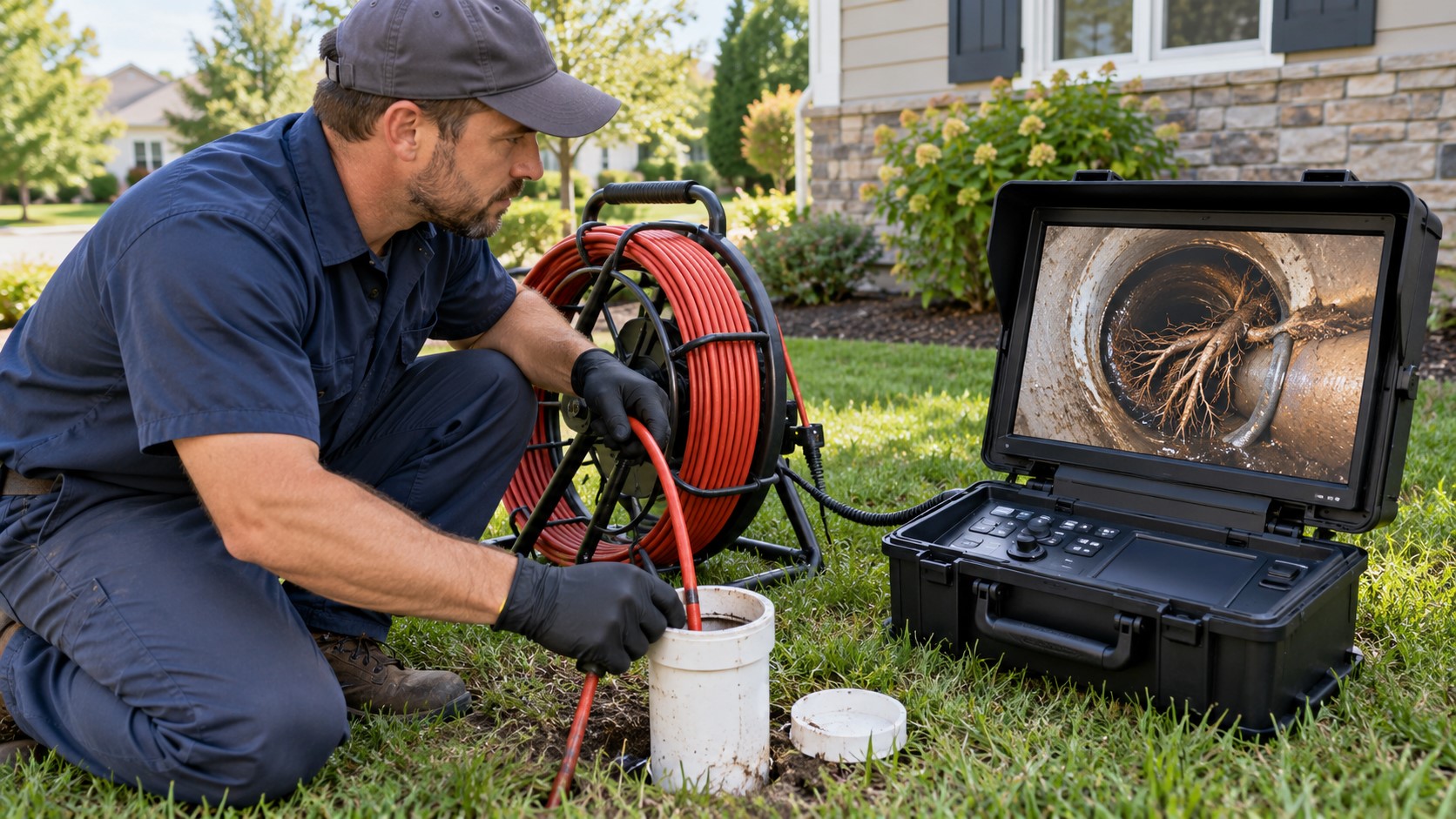
A camera inspection is especially useful when problems keep coming back, or when the age and material of an older line raise questions. A plumber or sewer inspector can run a camera through a cleanout to find cracks, roots, offsets, sags, corrosion, deformation, or collapse, and pinpoint where they are. Seattle Public Utilities also suggests getting a copy of the inspection video for your records. HomeGuide puts many sewer camera inspections at about $125 to $500.
What Camera Findings May Mean
| Finding | What It Often Points Toward |
|---|---|
| Minor roots or small cracks | Monitoring or maintenance, depending on severity |
| Moderate defects getting worse | Periodic re-inspection to track progress |
| Severe root intrusion | Cleaning may manage it, but the entry point may need repair |
| Severe cracks or fractures | Repair, as the line may be near structural failure |
| Major offsets or soil entering the pipe | Repair, since it can trap debris and erode soil |
| Large sags or “bellies” | Recurring blockages; often repair of that section |
| Collapse or major deformation | Reconstruction or replacement, not just cleaning |
General guidance only. A qualified professional should interpret your specific camera findings.
Does an Old Sewer Line Need Replacing Before It Fails?
Not automatically. Replacing a line just because it has reached a published age can mean replacing pipe that still works fine. On the other hand, ignoring an aging line with recurring backups and documented defects can lead to an emergency at the worst possible time.
A practical middle ground: use the pipe’s age and material to decide how closely to watch it, then use inspection findings and repair history to decide what to do. A decades-old Orangeburg line that’s deforming on camera is a very different situation from an equally old clay line with aligned joints and good flow.
Repair, Maintain, or Replace?
- Maintain when the pipe is structurally sound but roots or debris occasionally block flow.
- Repair a section when one area is damaged but the rest of the line is in good condition.
- Replace when defects are extensive, the pipe is collapsed or badly deformed, problems keep appearing in several sections, or spot repairs would just move the problem down the line.
If replacement is on the table, see our guides to sewer line replacement cost and trenchless sewer replacement.
Questions to Ask After a Sewer Camera Inspection
- What material is my sewer line, and has any section been replaced before?
- What defects did you find, and how far from the access point are they?
- Can I have a copy of the inspection video and still images?
- Is this a blockage, a maintenance issue, a structural defect, or a combination?
- Are roots entering through a specific crack or joint?
- Is the problem limited to one section or spread along the line?
- Would cleaning or a spot repair reasonably fix it?
- If you recommend replacement, what camera evidence supports it?
- Would trenchless repair or replacement work for this pipe?
- What could change the repair scope once work begins?
If sewage is backing up into your home: treat it as urgent. Raw sewage can contain
bacteria, viruses, and other contaminants, and the EPA warns that backups create health risks and property damage. Reduce
water use, avoid direct contact, and get professional help. If water is near electrical equipment, don’t enter the area
unless it’s safe.
How Long Do Sewer Lines Last? Frequently Asked Questions
How do I know how old my sewer line is?
Start with your home’s age and any records of sewer work. Lines are often partially replaced over time, so a camera inspection is the best way to see what material you actually have and what condition it’s in.
Should I replace my Orangeburg sewer line?
Orangeburg is the shortest-lived common sewer material, so if your home still has it, a camera inspection is a smart step. Replacement is often recommended when it shows deformation, blistering, or collapse.
How often should a sewer line be inspected?
There’s no set schedule for every home. A camera inspection is worth considering when you buy an older home, when problems keep returning, or when you know the line is an older material like Orangeburg or clay.
Does homeowners insurance cover an old sewer line?
Usually not for age-related wear or tree roots. Some insurers offer optional service line coverage. Check your policy.
The Bottom Line: How Long Do Sewer Lines Last?
A residential sewer line can serve for several decades or longer, but material and condition matter more than any universal replacement age. Orangeburg has the shortest typical lifespan at about 30 to 50 years. Clay and cast iron often serve for many decades but can develop joint, root, cracking, or corrosion problems. Modern PVC and ABS can potentially last 100 years or more when properly installed.
Use those numbers to ask better questions, not to schedule a replacement automatically. If an older line works normally and a camera shows no significant problems, age alone may not justify replacement. If backups keep recurring or an inspection shows serious defects, the pipe’s condition should drive the decision.
Get the Free Before You Hire Checklist
Download our free Before You Hire Home Repair Cost Checklist. Use it to compare sewer quotes and ask the right questions before you commit thousands of dollars.
Sources
- Seattle Public Utilities: Side Sewer Maintenance
- Seattle Public Utilities: Side Sewer Defects & Issues
- Seattle Public Utilities: Side Sewer Repair Methods
- U.S. EPA: Sanitary Sewer Overflow Frequent Questions
- Angi: A Homeowner’s Guide to Types of Sewer Pipes (2026)
- HomeGuide: Sewer Line Repair Cost
- HomeGuide: Sewer Camera Inspection Cost
House Care
Compass provides general educational information to help homeowners better understand repair and replacement decisions.
It does not diagnose specific problems. For advice about your specific home or project, consult an appropriately qualified
professional.