Roof Replacement Cost: What Homeowners Should Expect to Pay

Last updated: September 2026
A new roof is one of the biggest checks most homeowners will ever write, and the price can feel like a mystery until the estimates arrive. This guide explains what a roof replacement typically costs, what drives the price up or down, which hidden costs to plan for, and what to ask before you hire a contractor.
Quick Answer: How Much Does a Roof Replacement Cost?
- The national average is about $9,600, and most asphalt shingle roofs land between $6,000 and $20,000 (Angi, 2026 data).
- Installed prices usually run about $4 to $11 per square foot for common materials. Premium tile and slate can cost more.
- Biggest cost drivers: roof size and steepness, material, how many old layers must be removed, hidden decking damage, and local labor rates.
- Set aside 10% to 15% extra for surprises found during tear-off.
- These are national planning figures. Your home’s actual price can be different, so compare at least three written, itemized estimates.
How Much Does a Roof Replacement Cost?
According to Angi’s 2026 cost data, the national average roof replacement costs about $9,600. Across all materials and home sizes, prices range from roughly $5,900 to $46,000. For the most common choice, asphalt shingles, most homeowners pay somewhere between $6,000 and $20,000.
Contractors usually price roofs by the roofing square, which is a 100-square-foot section of roof. For a standard architectural asphalt shingle roof, a planning figure of about $4 to $8 per square foot (or $400 to $800 per square), including materials and installation, is a reasonable place to start.
Asphalt Shingle Roof Cost by Roof Size
Roof size is the biggest single driver of cost. Here is what a standard asphalt shingle replacement may cost at $4 to $8 per square foot:
| Roof Area | Estimated Cost (Asphalt) | Typical Home |
|---|---|---|
| 1,000 sq. ft. | $4,000 – $8,000 | Small ranch, bungalow, or townhome |
| 1,500 sq. ft. | $6,000 – $12,000 | Modest single-story home |
| 2,000 sq. ft. | $8,000 – $16,000 | Typical family home |
| 2,500 sq. ft. | $10,000 – $20,000 | Larger or two-story home |
| 3,000 sq. ft. | $12,000 – $24,000 | Large or multi-level home |
Note: Your roof area is usually larger than your home’s living space. Roof slope, overhangs, and an attached garage all add square footage. A steep roof can have 30% to 50% more surface area than the footprint of the house beneath it.
What a Standard Roof Replacement Quote Usually Includes
- Tear-off and disposal of the old roofing (usually one layer)
- Underlayment and ice-and-water shield in leak-prone areas
- New shingles, starter strips, and ridge caps
- New flashing around chimneys, valleys, walls, and vents
- Labor, cleanup, and the building permit (confirm the permit is included)
How Roofing Materials Affect Your Total Cost
Roof size decides how much material you need. The type of material is the biggest wild card in your budget. It also helps to look at cost per year of life. A material that costs more upfront can work out cheaper over time if it lasts much longer.
| Material | Installed Cost per Sq. Ft. | Typical Lifespan | Rough Cost per Year of Life (per Sq. Ft.) | Things to Watch For |
|---|---|---|---|---|
| Asphalt Shingles | $4 – $8 | 15 – 30 years | $0.13 – $0.53 | Shorter lifespan; vulnerable to high wind and algae staining |
| Wood Shakes | $6 – $15 | 20 – 40 years | $0.15 – $0.75 | Regular maintenance; rot and insect risk; fire rules in some areas |
| Metal | $7 – $16 | 40 – 70 years | $0.10 – $0.40 | Can be louder in rain or hail without good underlayment; fastener quality matters |
| Clay / Concrete Tile | $10 – $20 | 50 – 100 years | $0.10 – $0.40 | Very heavy; framing must be confirmed to carry the load |
| Natural Slate | $10 – $30+ | 75 – 150+ years | $0.07 – $0.40 | Very heavy and brittle; needs specialized installers |
Cost-per-year figures are rough planning comparisons made by dividing installed cost by lifespan. Actual lifespan depends on climate, installation quality, ventilation, and maintenance.
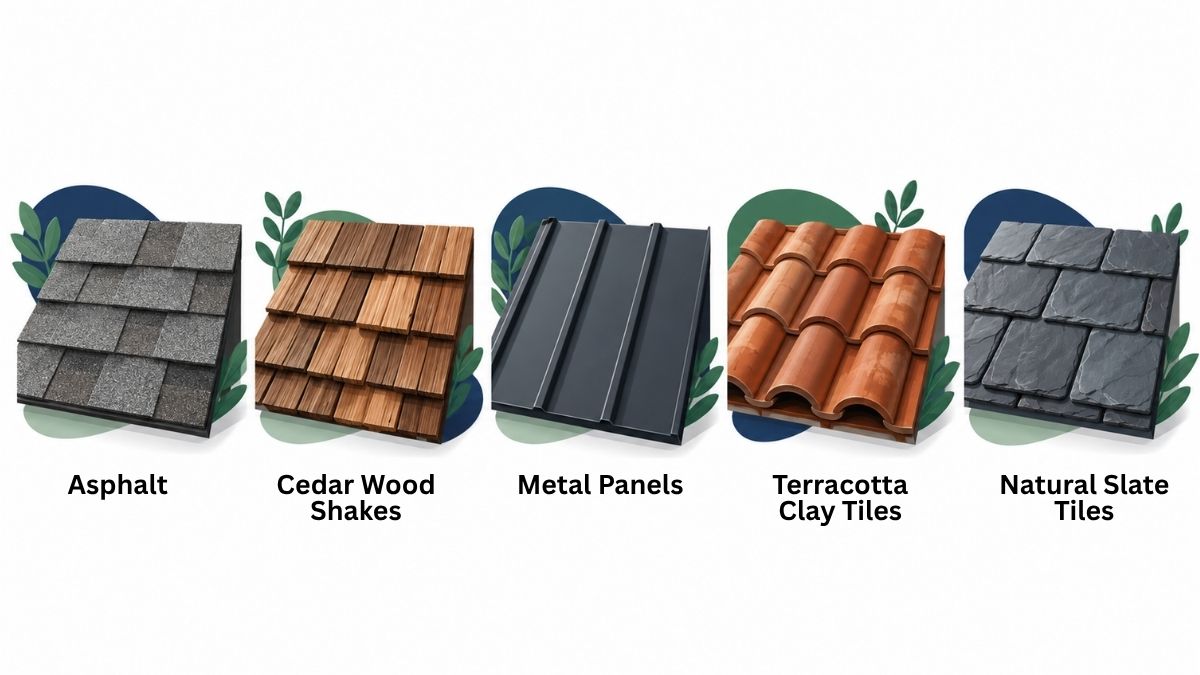
A Closer Look at Each Material
1. Asphalt Shingles: The Budget-Friendly Standard
Asphalt shingles are the most common roofing material on U.S. homes.
- The good: Lowest upfront cost, widely available, and many color options.
- The trade-off: Shortest lifespan of the common materials, and more exposed to storm and UV damage.
- What to ask: If your budget allows, ask for architectural (laminated) shingles instead of basic 3-tab shingles. They usually cost a little more but offer better wind resistance and longer warranties.
2. Metal Roofing: The Long-Lasting Alternative
Metal roofs range from lower-cost exposed-fastener panels to premium standing-seam systems.
- The good: Long lifespan, strong fire resistance, and sheds snow well. Reflective finishes may help reduce cooling costs in hot, sunny climates.
- The trade-off: Higher upfront cost than asphalt, and experienced metal installers can be harder to find in some areas.
- What to ask: Ask what underlayment and fasteners the contractor plans to use. Both affect noise and long-term leak resistance.
3. Wood Shakes: Natural, Rustic Look
Usually cedar, wood shakes have a distinctive look that weathers from warm brown to silver-gray.
- The good: Natural beauty and some added insulation value.
- The trade-off: Higher maintenance. Wood needs regular care to limit rot, moss, and mildew.
- What to check: Review your local building codes and talk with your homeowners insurance company first. Some areas restrict wood roofing because of fire risk, and some insurers charge more for it.
4. Clay and Concrete Tile: Built for Warm Climates
Common on Spanish, Mission, and Mediterranean-style homes, tile holds up well to heat and coastal air.
- The good: Resists rot and insects, highly fire-resistant, and can last for generations.
- The trade-off: Tile is very heavy, often much heavier than the framing of a typical shingle-roofed home was designed to carry.
- What to check: Before switching to tile, have a qualified structural engineer confirm your framing can support it. Also note that while tiles can last decades, the underlayment beneath them often needs replacing sooner.
5. Natural Slate: The Premium Long-Term Option
Slate is quarried stone split into thin tiles and is one of the longest-lasting roofing materials available.
- The good: Extremely durable, fireproof, and can last well over a century when properly maintained.
- The trade-off: One of the most expensive options, very heavy, and brittle. A careless step can crack a tile.
- What to ask: Only hire contractors with specific, verifiable slate experience.
Other Major Factors That Change Your Estimate
Size and material set the foundation of your price, but several other factors can move the final number.
1. Roof Pitch and Complexity
- Steep roofs cost more. Roofs that are too steep to walk comfortably (often around a 6:12 pitch or steeper) need extra safety equipment and slower work.
- More features, more labor. Valleys, hips, dormers, chimneys, and skylights all need custom cuts and flashing, which adds labor hours.
2. Number of Existing Shingle Layers
- One layer: Standard, and usually built into the base price.
- Two layers: If a previous owner roofed over the original shingles, both layers must come off. That means more labor and higher disposal fees.
3. Property Access
- Easy access: A single-story home with a driveway near the roofline lets the crew work efficiently.
- Limited access: Multiple stories, tight lot lines, delicate landscaping, or trees can force crews to carry materials by hand, adding time and cost.
4. Where You Live
- Local labor rates, permit fees, and building code requirements vary widely by region.
- Timing matters too. After major storms, roofers in the area are in high demand, and prices and wait times can rise.
Hidden Roof Replacement Costs to Plan For
A roof replacement is partly a demolition project. Once the old roofing comes off, crews often find problems that could not be seen from the ground. These are the most common add-on costs.
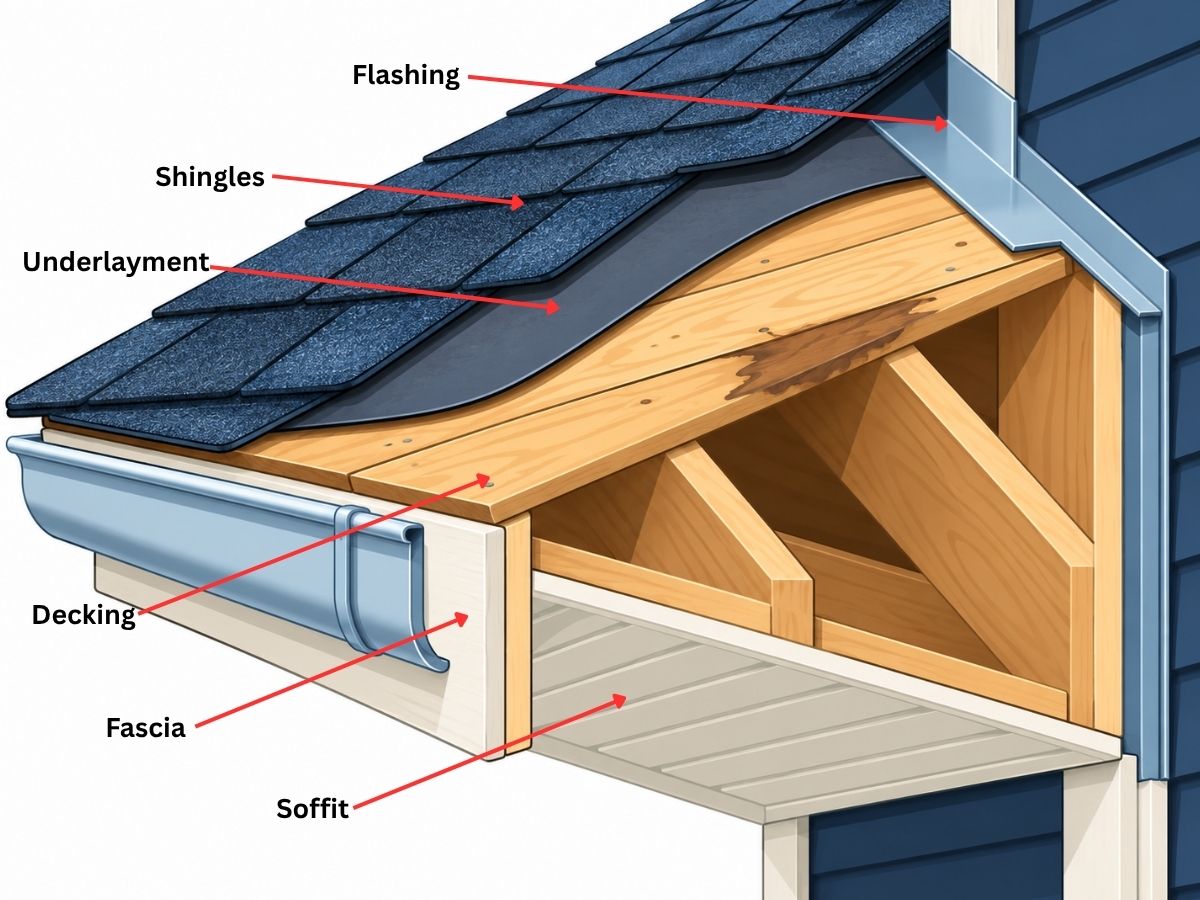
1. Damaged Roof Decking (Sheathing)
Your shingles are nailed to wood panels, usually plywood or OSB, called decking or sheathing. If your roof has leaked, some of that wood may be soft or rotted, and new shingles cannot be properly fastened to it. Because this damage is usually hidden until tear-off, plan for a possible charge of roughly $70 to $120 per 4×8 sheet replaced. Ask each contractor to put their per-sheet price in writing.
2. Rotted Fascia and Soffit Boards
The fascia (the trim board your gutters attach to) and soffit (the underside of the roof overhang) can rot when gutters overflow or ice dams form. Replacing damaged sections can add $500 to $2,000 or more, depending on how much needs replacing.
3. Attic Ventilation Upgrades
Poor attic ventilation traps heat and moisture, which can shorten shingle life and may affect your shingle warranty. If your current ventilation does not meet the manufacturer’s requirements or local code, adding ridge or soffit vents typically adds about $300 to $1,500.
4. Chimney Crickets and Masonry Repairs
- Chimney cricket: Under the International Residential Code, which many areas use, chimneys wider than 30 inches generally need a cricket (a small peaked structure behind the chimney that steers water around it). Adding one often costs $300 to $800.
- Mortar repair: If the chimney’s mortar is crumbling, a mason may need to repair it before new flashing can seal properly.
5. Skylight Replacement
Skylight flashing is disturbed during tear-off anyway, so a roof replacement is often the most cost-effective time to replace older skylights. Plan on roughly $800 to $1,800 per unit when done alongside the roof.
6. Solar Panels and Satellite Dishes
- Solar panels must be removed and reinstalled by a solar company, which often costs $1,500 to $3,500 or more depending on system size.
- Satellite dishes can be removed by roofers, but you may need your provider to reinstall and re-aim it.
7. Permits and HOA Approval
- Permits: Most areas require one. Angi’s data puts roofing permits anywhere from $100 to $1,400, with many falling in the lower part of that range.
- HOA approval: If you have a homeowners association, you may need approval for your material and color before work starts.
Pro Tip: Use the 10% to 15% Contingency Rule
Because no one knows exactly what is under your old shingles until they come off, set aside an extra 10% to 15% of your estimate for surprises. If the crew finds solid decking and healthy trim, that money stays in your pocket. If they do find damage, you can approve repairs without scrambling.
Don’t Get Blindsided by Your Roofing Estimate
Our free Before You Hire Home Repair Cost Checklist walks you through the questions to ask, the line items to look for, and the red flags to avoid, so you can compare quotes with confidence.
Check Your Attic Before You Get Estimates
Your attic can offer early clues about your roof’s condition, and knowing what you’ve seen helps you ask better questions when contractors visit. Only look if you can do so safely: use good lighting, stay on the framing or a walkway, and never step between joists onto insulation or drywall.
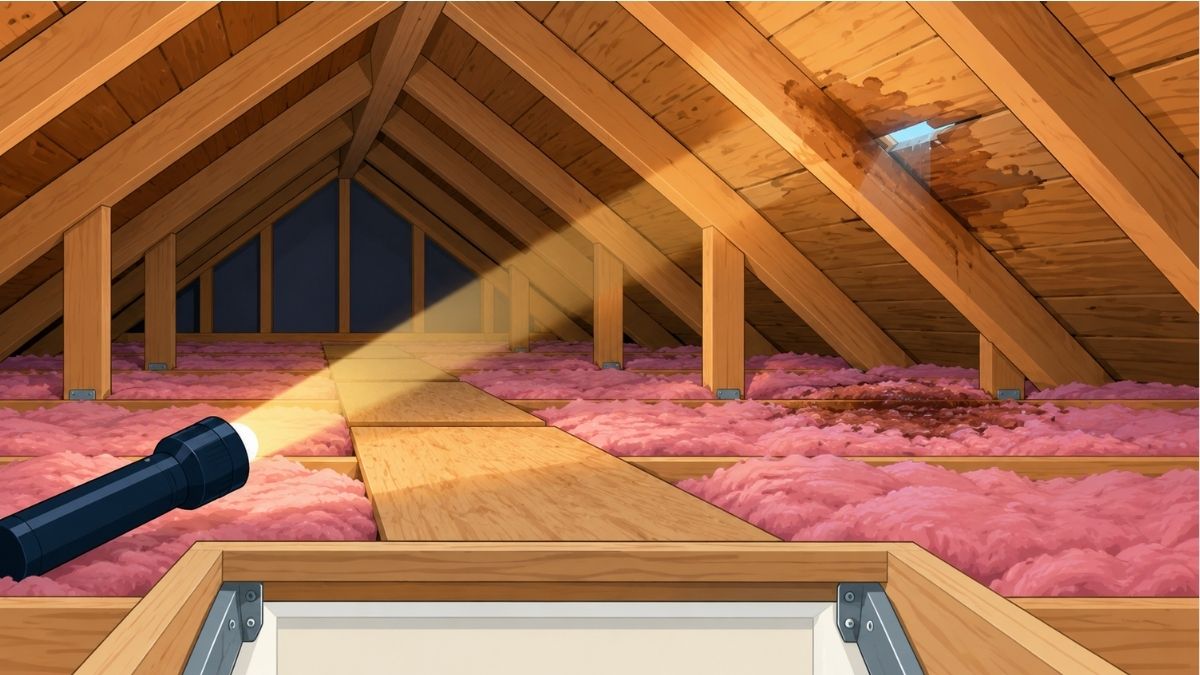
Things worth noting:
- Daylight showing through the roof boards
- Water stains, dark spots, or damp insulation
- Sagging between rafters or areas of decking that look warped
- Mold or a musty smell, which can point to moisture or ventilation problems
- Frost or heavy condensation on the underside of the roof deck in cold weather
These signs are clues, not a diagnosis. Share what you see with a qualified roofing professional who can inspect the roof directly and tell you whether a repair or a replacement makes sense.
Roof Repair vs. Roof Replacement: How to Decide
Before committing to a full replacement, it is worth asking whether a targeted repair would do the job. The right answer depends on a few key factors.
1. The Age of Your Roof
A 5- to 10-year-old asphalt roof with a small leak is usually a good repair candidate. A roof that is 20 to 25 years old or more is near the end of a typical asphalt lifespan, so repairs may only buy a little time before more problems appear.
2. How Much of the Roof Is Damaged
A common rule of thumb among roofers: if damage covers less than about 30% of the roof, a repair is often practical. When damage spreads across a larger share of the roof, repair costs can start to approach the cost of a replacement.
3. Active Leaks vs. Cosmetic Wear
- Cosmetic wear, such as algae staining, minor curling, or a few missing shingles, is often an easy, low-cost fix.
- A single leak from one failed spot, like a cracked vent boot, can usually be repaired.
- Multiple leaks in different areas can signal that the roof system as a whole is wearing out.
4. Your Long-Term Plans
If you plan to sell soon, a professional repair may be enough to get through a home inspection. A new roof can also help at resale: according to the 2025 Cost vs. Value Report, an asphalt shingle roof replacement recouped roughly two-thirds of its cost in added home value on average. If you plan to stay for many years, replacing an aging roof now may save you from repeated repair bills.
Quick Checklist: Repair or Replace?
A repair may make sense if:
- Damage is limited to one small area, such as where a branch fell.
- Only a few shingles are missing after a storm.
- The roof is less than about 15 years old and has been well maintained.
- A repair can safely buy you a few years to save for a replacement.
A replacement may make more sense if:
- The roof is near or past its expected lifespan.
- You see widespread sagging or soft spots.
- You are paying for repairs year after year.
- Shingles are curling, cracking, or losing granules across most of the roof.
- Your insurance company has flagged the roof’s age or condition.
Paying for a New Roof
Few homeowners have $10,000 or more set aside for a roof, so it helps to know the common ways people pay for one:
- Homeowners insurance: May cover damage from sudden events like hail, wind, or a fallen tree, minus your deductible. It typically does not cover a roof that simply wore out with age. Check whether your policy pays replacement cost or actual cash value.
- Contractor financing: Convenient, but read the terms closely. Some “no interest” promotions charge deferred interest if the balance isn’t paid off in time.
- Home equity or personal loans: Home equity options usually have lower rates but use your home as collateral. Personal loans are faster but often cost more in interest.
Whatever you choose, compare the total cost of borrowing, not just the monthly payment.
How to Get Accurate Estimates and Hire the Right Contractor
Even the best materials will fail early if they are installed poorly. These steps help protect your investment.

1. Get at Least Three Written Estimates
- Get at least three detailed quotes from local, licensed, and insured roofers.
- Compare apples to apples. Make sure each quote covers the same materials, shingle grade, and scope of work.
2. Verify Credentials
- License: If your state or city licenses roofers, ask for the number and verify it with the licensing agency.
- General liability insurance: Ask for a current certificate of insurance.
- Workers’ compensation: Confirm coverage so you are not exposed if a worker is injured on your property.
- A local presence: Be cautious of out-of-town “storm chasers” who appear after major storms and may be hard to reach later for warranty work.
3. Ask for an Itemized, Written Bid
A solid estimate should clearly list:
- The brand and product line of the shingles or other materials
- The type of underlayment
- Whether the old roof will be fully torn off
- Disposal and dumpster costs
- The price per sheet for any rotted decking replacement
- Ventilation work, if needed
- The payment schedule and warranty terms
4. Understand the Payment Schedule
Reputable contractors do not ask for the full price upfront. Deposit amounts vary, and some states legally limit them. California, for example, generally caps home improvement deposits at 10% of the contract price or $1,000, whichever is less. Check your state’s rules, and plan to pay the final balance only after the work is complete, the site is cleaned up, and any required final inspection has passed.
5. Know Your Two Warranties
- Manufacturer’s warranty: Covers defects in the roofing materials.
- Workmanship warranty: Provided by the contractor and covers installation errors. Terms vary widely, so get the length and coverage in writing.
- Contractors certified by a shingle manufacturer (such as GAF or Owens Corning programs) may be able to offer extended warranties that cover both materials and labor.
6. Watch for Red Flags
- A bid far below the others may mean cut corners or costs that will be added later.
- High-pressure tactics, like “today-only” pricing or pushing you to sign over an insurance check before work begins.
- Cash-only payment requests, which leave you without a paper trail.
Roof Replacement Cost: Frequently Asked Questions
How long does a roof replacement take?
Many asphalt shingle roofs on typical homes are replaced in one to three days. Larger homes, steep or complex roofs, premium materials, weather delays, or hidden damage can extend the timeline.
Can I put new shingles over my old roof?
Sometimes, but it is often not recommended. Many building codes do not allow a new layer if the roof already has two layers, if the existing roof is damaged or water-soaked, or with certain materials like tile or slate. Roofing over also hides the decking, so rot can go unnoticed. Check local code and ask your contractor.
Does homeowners insurance pay for a new roof?
Insurance may help when damage comes from a sudden, covered event such as hail, wind, or a fallen tree. It usually does not pay to replace a roof that has worn out from age. Review your policy and talk with your insurer about your specific situation.
Do I need a permit to replace my roof?
In most areas, yes. A licensed contractor typically pulls the permit and includes the fee in the quote. Confirm this in writing before work begins.
What is the cheapest time to replace a roof?
Roofers are often busiest in late summer and fall and right after major storms. Scheduling during a slower season in your area, when weather allows, may give you more flexibility on timing and price.
Your Next Step
A roof replacement is a big decision, but you don’t have to walk into it blind. Before you call a contractor, get a rough sense of your roof’s size, decide which materials fit your budget, and know which questions to ask so you can compare every estimate side by side.
Get the Free Before You Hire Checklist
Download our free Before You Hire Home Repair Cost Checklist. It helps you compare roofing quotes, spot missing line items, and avoid common costly mistakes before you sign anything.
House Care Compass provides general educational information to help homeowners better understand repair and replacement decisions. Cost figures are national planning estimates and will vary by location, home, and contractor. For advice about your specific home or project, consult an appropriately qualified professional.