Trenchless Sewer Line Replacement Cost: Is No-Dig Replacement Worth It?
Last updated: September 2026
Trenchless sewer work can sound like the obvious choice: fix or replace the buried sewer line without digging a long trench through your yard, driveway, patio, or landscaping. Often, that reduced surface damage is the main advantage. But trenchless isn’t always the cheapest option, and not every damaged sewer line is a good candidate. This guide explains the costs, the two main methods, and how to tell whether trenchless makes sense for your home.
Quick Answer: How Much Does Trenchless Sewer Line Replacement Cost?
- Typical planning range: about $60 to $250 per linear foot, depending on the method and project.
- Pipe bursting: roughly $60 to $200 per foot. Pipe lining (CIPP): roughly $90 to $250 per foot (HomeGuide).
- Typical project total: about $1,900 to $6,000, averaging around $2,900 (Angi, 2026).
- Biggest cost drivers: pipe length and diameter, depth, access, pipe condition, roots or obstructions, permits, access pits, and restoration.
- Trenchless can reduce yard and driveway damage, but it isn’t automatically cheaper. A camera inspection and written estimate are still needed.
What Does “Trenchless” Actually Mean?
Trenchless is a broad term for sewer repair or replacement methods that avoid digging up the entire length of the pipe. The two most common residential methods are very different:
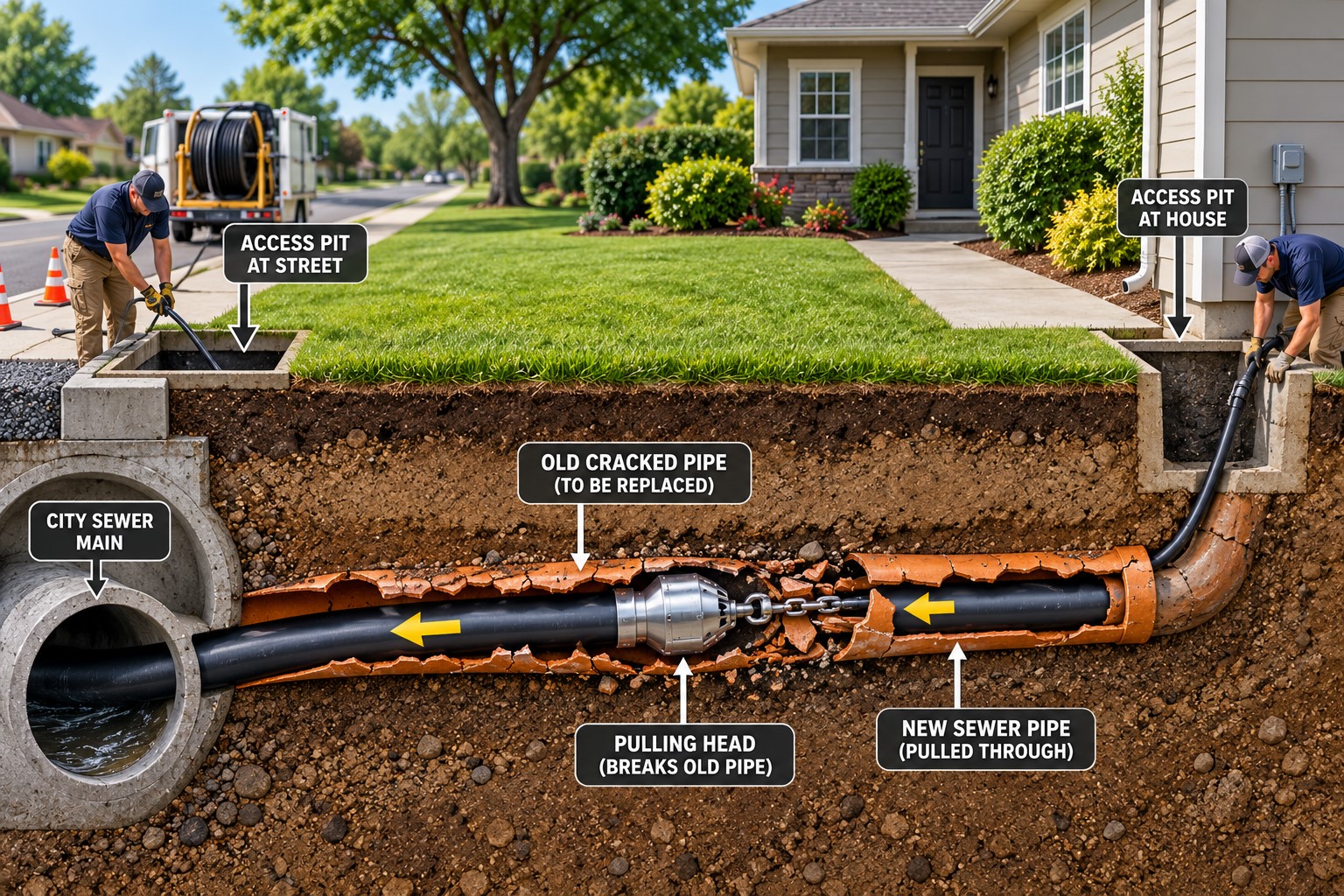
- Pipe bursting breaks apart the old pipe while pulling a new pipe into roughly the same path. It’s a true replacement.
- Cured-in-place pipe (CIPP) lining inserts a resin-soaked liner into the existing pipe and cures it in place, creating a new pipe inside the old one. It’s a rehabilitation of the existing line. ASTM maintains an industry standard (F2561) for one form of this kind of sewer lateral lining.
Contractors and cost guides sometimes lump both under “trenchless,” so make sure any estimate says exactly which method is being proposed.
How Much Does Trenchless Sewer Line Replacement Cost?
National cost guides show a wide range because trenchless projects vary a lot. HomeGuide places pipe bursting at about $60 to $200 per linear foot and CIPP lining at about $90 to $250 per linear foot. Angi’s 2026 data puts many projects at about $1,900 to $6,000, averaging around $2,900, and lists typical per-foot prices of about $135 to $150 for lining and $150 to $190 for bursting.
Trenchless Sewer Cost by Line Length
| Sewer Line Length | Estimated Cost Range |
|---|---|
| 25 – 35 feet | $1,500 – $8,750 |
| 35 – 45 feet | $2,100 – $11,250 |
| 45 – 55 feet | $2,700 – $13,750 |
| 55 – 75 feet | $3,300 – $18,750 |
| 75 – 100 feet | $4,500 – $25,000 |
Source: Angi 2026 national cost data. Permits, camera inspection, and restoration may be extra.
These are planning ranges, not quotes. A short, accessible line with easy entry points is a very different project from a deep line running under a driveway or mature landscaping.
Trenchless vs. Traditional Excavation at a Glance
| Factor | Trenchless | Traditional Open Trench |
|---|---|---|
| Digging | Small access pits | Trench along the full pipe route |
| Price per foot | Often higher | Can be lower for the pipe work itself |
| Restoration | Usually minimal | Can be major under driveways, patios, or landscaping |
| Best for | Lines under hardscape or landscaping; pipe suitable for lining or bursting | Collapsed or badly misaligned pipe; open, easy-to-dig areas |
| Fixes slope/sag problems? | Often limited | Yes, with direct access to regrade |
Why Trenchless Can Cost More per Foot but Less Overall
Traditional excavation may have a lower price for the pipe work in some cases, but the trench is only part of the bill. If a conventional replacement means tearing out and rebuilding a driveway, patio, walkway, retaining wall, or mature landscaping, restoration can add significantly to the final cost. Trenchless work may reduce those secondary costs because only limited access points are needed.
That’s why the best comparison isn’t price per foot. Compare the entire project: excavation, pipe work, permits, cleanup, and restoration.
Pipe Bursting: Cost and When It Makes Sense
With pipe bursting, a bursting head is pulled through the old pipe, fracturing it as it goes and pulling new pipe in behind it. National data commonly puts it at about $60 to $200 per linear foot. It can work well when the old line is badly deteriorated or cracked, too damaged for lining, but the general path of the existing sewer can still be used.

Pipe Lining (CIPP): Cost and When It Makes Sense
With CIPP lining, the contractor inserts a flexible, resin-coated liner into the old pipe, expands it against the pipe walls, and cures it into a new pipe-like structure. National guides commonly put it at about $90 to $250 per linear foot. Angi notes that sewer pipe liners are rated to last up to about 50 years.
Lining avoids removing the old pipe, but it depends on the existing pipe being suitable. A severely collapsed, badly deformed, or inaccessible line may need a different approach.

What Makes Trenchless Sewer Work More Expensive?
- Length: longer runs need more pipe or liner, labor, and equipment time.
- Pipe diameter: larger pipe can need more material and specialized equipment.
- Depth: deep lines make access pits, safety measures, and connections harder.
- Access: a usable cleanout and good entry and exit points simplify the job.
- Pipe condition: heavy roots, deformation, collapse, or offsets may need cleaning, prep, or a different method.
- Camera inspection: usually needed to confirm the method (see below).
- Permits and inspections: Angi notes permits can run up to about $1,000 depending on local requirements.
- Connections: tying into the house and the public sewer can add complexity.
- Surface restoration: trenchless reduces digging but doesn’t always eliminate it.
Comparing Trenchless and Traditional Quotes?
Our free Before You Hire Home Repair Cost Checklist helps you line up estimates side by side, spot missing items like restoration and permits, and ask the right questions before you sign.
When Trenchless May Be Worth It
- The sewer line runs under a driveway, patio, walkway, or mature landscaping.
- The damaged line is long enough that trenching would substantially disturb the property.
- A camera inspection shows the pipe is suitable for bursting or lining.
- You want to reduce digging, cleanup, and restoration.
- The total trenchless quote is competitive once traditional restoration costs are included.
When Traditional Excavation May Be the Better Option
Trenchless isn’t a universal solution. Traditional excavation may be more practical when the line has a major collapse, severe alignment or sagging problems, difficult connections, or when direct access is needed to correct the pipe’s slope. It can also make sense when the pipe runs under open lawn where restoration is inexpensive. A method that avoids digging but doesn’t fix the actual problem isn’t a bargain.
Get a Camera Inspection Before Choosing a Method
Before choosing pipe bursting, lining, or excavation, the contractor needs to know what’s happening inside the line. A sewer camera can reveal cracks, roots, offsets, deformation, blockages, or collapse, and help locate the damage.
HomeGuide puts many sewer camera inspections at about $125 to $500 with cleanout access, and about $175 to $750 without one. A camera doesn’t guarantee one method is right, but it gives you far better evidence than choosing based on symptoms alone. If you’re still figuring out whether you have a sewer problem at all, see our guide to the signs of sewer line problems.
Questions to Ask Before Approving a Trenchless Estimate
- What did the camera inspection show? Can I see the footage?
- Are you proposing pipe bursting, CIPP lining, or another method?
- Is this a true pipe replacement or a rehabilitation of my existing pipe?
- Why is this method right for the condition of my line?
- What length and diameter of pipe are included?
- How many access pits or dig areas will be needed?
- Are permits, inspections, camera work, cleaning, and final testing included?
- What surface restoration is included, and what’s excluded?
- How will connections at the house and public sewer be handled?
- Will this method reduce the inside diameter of the pipe?
- What happens if the pipe is in worse shape than expected?
- What warranty covers the pipe or liner and the labor?
How to Compare Trenchless and Traditional Estimates
Don’t compare only the headline number. A traditional quote may look cheaper until driveway replacement, landscaping repair, hauling, and concrete work are added. A trenchless quote may cost more per foot but include much less restoration. Ask both contractors to break their estimates into the same categories: diagnosis, excavation or access, pipe work, permits, connections, cleanup, and restoration. That shows whether trenchless is saving money, saving disruption, or both.
For full sewer replacement pricing across all methods, see our guide to sewer line replacement cost.
Trenchless Sewer Replacement: Frequently Asked Questions
Is trenchless sewer replacement cheaper than digging?
Not always. It often costs more per foot, but it can cost less overall when the line runs under a driveway, patio, or landscaping that would be expensive to restore after digging.
How long does trenchless sewer replacement take?
Many residential trenchless jobs are completed in about a day or two, compared with several days for many open-trench projects. Pipe condition, length, permits, and access can extend the timeline.
How long does a trenchless sewer line last?
Angi notes that sewer pipe liners are rated to last up to about 50 years. New pipe installed by pipe bursting, often HDPE plastic, is generally expected to last for decades as well. Ask your contractor about the specific product and its warranty.
Does pipe lining make the pipe smaller?
Lining adds a thin layer inside the existing pipe, so it can slightly reduce the inside diameter. Ask the contractor how much and whether it affects flow for your line.
Does homeowners insurance cover trenchless sewer repair?
Standard policies often don’t cover sewer line damage from age, wear, or roots. Some insurers offer service line add-on coverage. Check your policy before work begins.
The Bottom Line on Trenchless Sewer Line Replacement Cost
For planning, trenchless sewer work commonly falls around $60 to $250 per linear foot. Pipe bursting often runs about $60 to $200 per foot, and CIPP lining about $90 to $250 per foot, with many projects totaling around $1,900 to $6,000.
Trenchless methods can reduce damage to yards, driveways, and landscaping, which can make the total project more attractive even when the pipe work costs more. Before approving a project, make sure you understand whether it’s a replacement or a rehabilitation, why that method fits your sewer’s condition, how much digging is still required, and exactly what restoration is included.
Get the Free Before You Hire Checklist
Download our free Before You Hire Home Repair Cost Checklist. Use it to compare sewer quotes, catch missing line items, and avoid costly surprises.
Sources
- HomeGuide: Sewer Line Repair and Replacement Cost
- Angi: Trenchless Sewer Line Replacement Cost (2026 Data)
- HomeGuide: Sewer Camera Inspection Cost
- ASTM International: F2561 Cured-in-Place Sewer Lateral Rehabilitation Standard
House Care
Compass provides general educational information to help homeowners better understand repair and replacement decisions.
Cost figures are national planning estimates and will vary by location, home, and contractor. For advice about your
specific home or project, consult an appropriately qualified professional.