Roof Leak Repair: Possible Causes, Warning Signs, and What to Do Next

Last updated: September 2026
A roof leak can start as a small ceiling stain and turn into a much bigger problem if water keeps getting in. The tricky part is that where you see water inside isn’t always directly below where it entered the roof. Water can travel along roof decking, rafters, insulation, or pipes before it shows up on a ceiling or wall.
This guide covers the most common causes of roof leaks, the warning signs to watch for, what to do right away, and what a repair may cost.
Quick Answer: What to Do About a Roof Leak
- Protect the inside first. Move belongings, catch drips, and stay away from wet areas near electrical fixtures.
- Document it. Take photos and note when the leak happens (every rain, only heavy or wind-driven rain).
- Don’t climb on the roof. Look from the ground, and check the attic only if it’s safe to do so.
- Have the source evaluated. The stain you see may be several feet from where water is getting in.
- Know the likely cost: many leak repairs run about $150 to $1,200, while large leaks with decking or interior damage can reach $3,000 or more (HomeGuide).
Common Causes of Roof Leaks
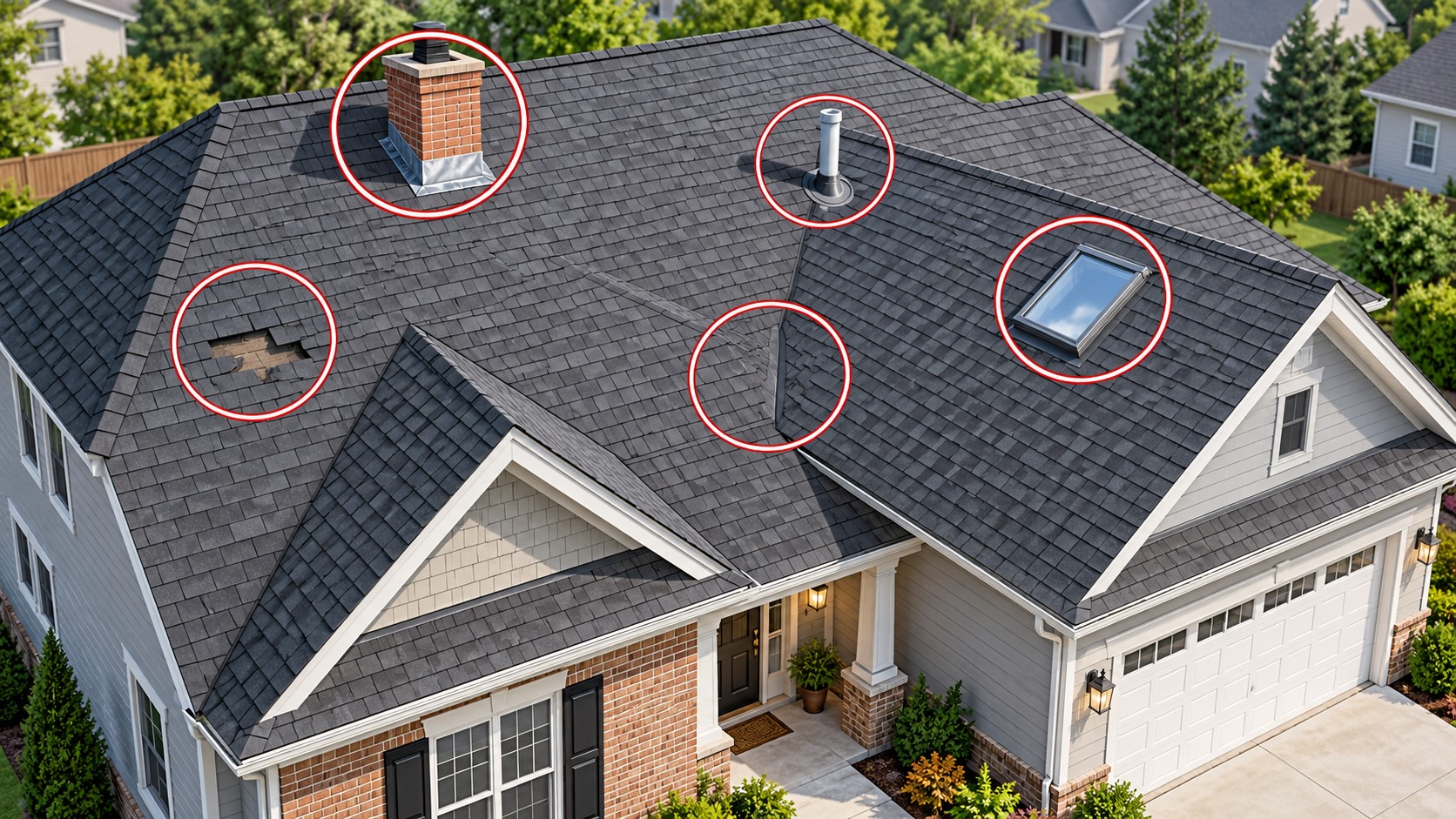
Roof leaks usually start where roofing materials are damaged, worn, or interrupted by something that passes through the roof. These are the most common trouble spots:
- Damaged or missing shingles. Cracked, curled, torn, or missing shingles expose the layers underneath to wind-driven rain. Smaller defects can be hard to see from the ground.
- Failed flashing. Flashing is the metal or waterproofing material where the roof meets walls, chimneys, skylights, and vents. When it loosens, corrodes, cracks, or was installed incorrectly, water can get in at those joints.
- Vents, pipes, chimneys, and skylights. Every opening in the roof has to shed water correctly. Cracked rubber pipe boots, worn sealant, or damaged flashing around these spots are frequent leak sources.
- Roof valleys. Valleys carry a lot of runoff where two roof slopes meet. Damage, debris, or poor installation there can create a leak path.
- Wind, hail, or storm damage. Wind can lift or tear off shingles and flashing. Hail and falling branches can cause damage that isn’t obvious from the yard.
- Aging materials. As roofing weathers, shingles may crack, lose granules, or turn brittle, and older sealants and flashing can break down.
- A moisture source that isn’t the roof. Not every ceiling stain is a roof leak. Plumbing leaks, HVAC condensation, bathroom exhaust problems, or attic condensation can look similar.
Warning Signs You May Have a Roof Leak
A leak is sometimes obvious during a storm, but many show up through secondary signs first. Watch for:
- Brown, yellow, or gray stains on ceilings or upper walls
- Bubbling, peeling, or blistering paint or drywall
- Damp insulation or visible moisture in the attic
- Dark staining on roof decking or rafters
- A musty odor in the attic or an upstairs room
- Dripping water during or shortly after rain
- Missing, cracked, or lifted shingles visible from the ground
- Damaged flashing or gaps around a chimney, skylight, vent, or pipe
- Sagging or softened ceiling material
The U.S. Environmental Protection Agency advises homeowners not to ignore wet spots or water stains, and to fix moisture problems promptly. Wet materials should be dried quickly, because ongoing moisture can lead to mold and damage building materials.
What to Do When You First Notice a Roof Leak
1. Protect the Interior
If water is actively dripping, move furniture, electronics, and rugs away from the area if you can do so safely. Use a bucket or container to catch drips, and protect nearby floors and finishes.
2. Document What You See
Photograph stains, drips, damaged finishes, and any exterior damage you can safely see from the ground. Note whether the leak happens during every rain, only heavy rain, or only wind-driven rain from a certain direction. That information can help a roofer narrow down the source, and photos can help if you file an insurance claim.
3. Check the Attic Only If It’s Safe
If you can get into the attic safely, look for damp insulation, water stains, wet decking, or signs that water has traveled along the framing. Use good lighting, stay on the joists or a walkway, and never step onto insulation or drywall between joists.
4. Get the Leak Evaluated
A qualified roofer can check likely entry points and tell you whether the problem is one localized spot or part of a broader roofing issue. If the leak is active or the ceiling is sagging, treat it as urgent. If a permanent repair can’t happen right away, ask about emergency tarping, which HomeGuide puts at roughly $175 to $700.
Don’t Assume the Ceiling Stain Shows Where the Roof Is Leaking

One of the most confusing parts of roof leak repair is that water moves. Rain can enter around flashing or a vent, run along the underside of the roof deck or a rafter, and then drip several feet away from where it came in. Insulation can also soak up and spread moisture.
That’s why simply patching the roof directly above a ceiling stain can miss the real problem. Finding the source may require examining the roof surface together with the attic or underside of the roof deck.
Why an Attic Inspection Helps
When attic access is safe and practical, the underside of the roof can show valuable evidence: moisture stains, damp insulation, darkened decking, ventilation problems, or water tracks that point to the leak’s path. It won’t reveal every hidden defect, though. Some damaged decking isn’t visible until shingles and underlayment are removed.
Ask your roofer whether they’ll check the attic or underside of the roof deck if it’s safely accessible, and how any hidden decking damage will be handled and priced if they find it.
When a Roof Leak Needs Urgent Attention
Call for professional help right away if:
- Water is coming in near light fixtures, wiring, or an electrical panel
- The ceiling is bulging, sagging, or heavily saturated
- Water is coming in over a large area rather than one spot
- The leak started after major wind, hail, or a falling tree
- You see a sagging roof area or damaged framing
- The leak keeps coming back after previous repairs
Safety note: If water is near electrical equipment or you’re unsure whether an area is
safe, stay out of the wet area and get professional help. Water and electricity are a dangerous combination.
What Does Roof Leak Repair Cost?
Cost depends on what’s causing the leak and how far the water has spread. HomeGuide’s national data breaks leak repairs down by severity:
| Leak Severity | Typical Repair Cost |
|---|---|
| Small leak, limited damage | $150 – $500 |
| Average leak | $500 – $1,200 |
| Large leak or multiple entry points | $1,200 – $3,000 |
| Emergency tarping (temporary) | $175 – $700 |
Source: HomeGuide national cost data. Repairs to drywall, insulation, or framing inside the home are usually extra.
A simple fix like replacing a cracked pipe boot or resealing flashing is often at the low end. Leaks that have soaked the decking or damaged ceilings cost more. For a full breakdown of shingle, flashing, and decking repair prices, see our guide to roof repair cost. If the roof is older and leaking in several places, compare repair quotes with our guide to roof replacement cost.
Hiring a Roofer? Don’t Go In Blind
Our free Before You Hire Home Repair Cost Checklist helps you compare roofing estimates, spot missing line items, and ask the right questions before you approve a repair.
Should You Get on the Roof to Find the Leak?
Usually, no. A wet or storm-damaged roof is a dangerous place for an untrained homeowner. Roof work carries serious fall risk, and even professional roofers are required to plan for fall protection. From the ground, you may be able to spot missing shingles, displaced flashing, or fallen branches without climbing up. If the roof is steep, wet, icy, or damaged, leave the roof-level inspection to someone trained and equipped to do it safely.
Can a Roof Leak Cause Mold or Interior Damage?
Yes. A roof leak can soak insulation, drywall, wood framing, and ceilings. The EPA identifies moisture control as the key to preventing indoor mold and recommends drying wet or damp materials within about 24 to 48 hours when possible. The longer water keeps coming in, the more likely repairs will expand beyond the roof itself.
Fixing the visible stain without stopping the water source doesn’t solve the problem.
Will Homeowners Insurance Cover a Roof Leak?
It depends on the cause. Insurance may help when a leak results from a sudden, covered event such as wind, hail, or a fallen tree. It typically doesn’t cover leaks caused by age, wear and tear, or lack of maintenance. If storm damage may be involved, take photos, prevent further damage if you can do so safely, and contact your insurer before permanent repairs begin.
Questions to Ask About a Roof Leak Repair
- Where do you believe the water is getting in, and what evidence points there?
- Is this one localized problem, or are there signs of broader roof wear?
- Will you check the attic or underside of the roof deck if it’s safely accessible?
- Do you see moisture staining, ventilation problems, or decking damage?
- Could hidden decking damage show up once shingles are removed?
- If hidden damage is found, how will extra work be priced?
- Which roofing materials and flashing will be repaired or replaced?
- Is this a permanent repair or a temporary fix?
- What warranty applies to the repair?
Repairing the Leak Is Only Part of the Job
A complete roof leak repair has two parts: stop the water from getting in, and deal with the moisture that already got in. Once the roof is fixed, wet insulation, drywall, or ceilings may still need drying, repair, or replacement depending on how much water came in and how long it stayed wet.
If the same area has leaked more than once, ask whether previous repairs fixed the actual entry point or only the visible symptom.
Roof Leak Repair: Frequently Asked Questions
Can a roof leak be fixed from the inside?
Not permanently. You can catch drips and protect belongings from inside, but the actual repair has to happen where water enters the roof.
Why does my roof only leak in heavy rain?
Leaks that appear only in heavy or wind-driven rain often point to flashing, vents, valleys, or lifted shingles that let water in only when it’s pushed sideways or runoff is heavy. Note the conditions and share them with your roofer.
Is a roof leak an emergency?
An active leak near electrical fixtures, a sagging ceiling, or widespread water intrusion should be treated as urgent. A small, old stain that isn’t growing is less urgent but should still be checked soon.
Does a leak mean I need a new roof?
Not necessarily. Many leaks come from one failed spot, like flashing or a pipe boot, and can be repaired. Multiple leaks on an aging roof may make replacement worth comparing.
The Bottom Line
A roof leak is a symptom, not a diagnosis. Missing shingles may be the cause, but so can failed flashing, roof openings, storm damage, aging materials, drainage problems, or even a moisture source that isn’t the roof at all.
Protect the interior, document the damage, skip the ladder, and have the source evaluated before assuming you know where the water is coming in. Catching a leak early can limit how much roofing and interior repair you’ll need later.
Get the Free Before You Hire Checklist
Download our free Before You Hire Home Repair Cost Checklist. Use it to compare roofer quotes, catch missing line items, and avoid costly surprises.
Sources
- GAF: How to Identify and Repair Roof Leaks
- GAF: How to Identify Roof Damage
- U.S. EPA: A Brief Guide to Mold, Moisture and Your Home
- U.S. EPA: Mold Course, Chapter 9 (Prevention)
- U.S. OSHA: Fall Prevention Resources
- HomeGuide: Roof Shingle Repair Cost
House Care
Compass provides general educational information to help homeowners better understand repair and replacement decisions.
It does not diagnose specific problems. For advice about your specific home or project, consult an appropriately qualified
professional.