Home Problems
Hail Damage Roof Repair: Signs, Costs, and Next Steps

Last updated: September 2026
Hail can damage a roof in ways that are obvious from the ground, but it can also leave smaller impact damage that’s hard to spot right away. After a hailstorm, the goal isn’t to climb onto the roof and hunt for every mark yourself. It’s to look for safe, visible clues, document what happened, protect the inside of your home if water is getting in, and get a professional evaluation if damage is suspected.
Quick Answer: Hail Damage on Your Roof
- Wait until it’s safe, then check from the ground: dented gutters, vents, siding, and AC units are common clues.
- Document everything with photos and note the date and time of the storm.
- Don’t climb on the roof. Protect the interior if water is coming in.
- Get a roof inspection and review your homeowners policy before filing a claim.
Typical cost: This Old House puts the average hail repair around $940 ($4 to $7 per sq. ft.), while Angi’s 2026 data shows most projects between $375 and $7,500. Widespread damage can mean a full roof replacement.
How Much Does Hail Damage Roof Repair Cost?
National cost guides show a very wide range because hail damage can mean anything from a few bruised shingles to a roof-wide problem:
- This Old House (2026): average repair around $940, or about $4 to $7 per square foot.
- Angi (2026): average around $4,250, with most homeowners paying $375 to $7,500 and an overall range of roughly $150 to $12,500.
Why such different averages? Each guide draws on different projects. Some average in lots of small shingle repairs, while others include larger jobs that replace whole roof sections. The takeaway: a small, localized repair may cost a few hundred dollars, while widespread damage can run into the thousands or lead to a full replacement.
Other Costs That Often Come With Hail Damage
Hail rarely damages only shingles. This Old House’s 2026 data gives these ranges for related repairs:
| Related Repair | Typical Cost |
|---|---|
| Flashing repair | $150 – $1,000 |
| Gutter repair | $193 – $620 |
| Interior water damage repair | $400 – $1,700 |
| Professional roof inspection | About $220 on average |
| Full roof replacement (if needed) | About $10,000 on average |
Source: This Old House 2026 hail damage cost guide. Local prices vary.
For a broader look at repair pricing, see our guides to roof repair cost and roof replacement cost.
What Hail Damage Can Look Like on a Roof
Hail doesn’t always leave a neat pattern of obvious holes. GAF notes that hail damage may appear as random dents or depressions, and that it isn’t always obvious right away. That’s why a roof can look fine from the yard even when a closer inspection finds damage.
- Granule loss: hail can knock the protective granules off asphalt shingles, leaving darker spots.
- Bruising or dents: a shingle may show a soft-looking bruise or depression rather than a clean crack.
- Cracked shingles: larger or harder hail can split shingles, especially on older, brittle roofs.
- Dented metal: dents in vents, flashing, gutters, or downspouts are evidence your home was hit.
- Damaged skylights: cracked or dented skylight parts often accompany roof damage.
- Interior water stains: if the roof was compromised, water may show up as stains, damp insulation, or leaks.

Hail Size Matters, But It’s Not the Only Factor
The National Weather Service classifies hail 1 inch in diameter (about quarter-size) or larger as severe-thunderstorm hail, and its damage-assessment guidance notes that shingle damage becomes more likely as hail size increases, particularly above about 1 inch. But roof age, material, hail hardness, wind speed, impact angle, storm length, and existing wear all matter too. A storm report can show hail hit your area, but only an inspection can tell whether your roof was damaged.
Signs You Can Check Safely From the Ground

You don’t need to climb onto the roof to gather useful information. Once conditions are safe, walk around the property and look for:
- Dents in gutters, downspouts, and metal roof vents
- Dents or chips on siding, fascia, or window trim
- Damage to your outdoor AC unit
- Broken or cracked skylights
- Roofing debris or loose granules on the ground or collected in gutters
- Missing, cracked, or displaced shingles visible from the ground (binoculars help)
- Water stains or dripping inside the home
GAF recommends documenting hail size when possible, photographing visible damage, checking the attic and exterior, and using binoculars from the ground rather than climbing onto a roof after a storm.
Stay off the roof. After a storm, a roof may be wet, slick, damaged, or covered with
loose granules and debris. Use ground-level observations, photos, and binoculars, and leave rooftop inspection to someone
with the training and equipment to work safely at height.
Why Hail Damage Is Sometimes Easy to Miss
Not every damaging impact causes an immediate leak. Hail can knock off granules or crack the shingle surface without creating an opening that day. GAF’s technical guidance notes that hail damage may show up later as granule loss and premature aging. So the lack of an active leak doesn’t prove your roof came through unharmed.
What to Do After a Hailstorm
1. Wait Until It’s Safe
Don’t go outside while lightning, high winds, or hail are still present.
2. Photograph Everything You Can See
Take pictures of any remaining hailstones (with a coin or ruler for scale), dents in metal, damaged siding, broken skylights, interior stains, and any roof damage visible from the ground.
3. Note the Date and Time
Storm timing helps when reviewing local weather reports or talking with a contractor or insurer.
4. Protect the Interior
If water is coming in, move belongings away from the leak and catch drips. Our guide to roof leak repair covers what to do first.
5. Schedule a Roof Inspection
If you see signs of impact or the storm produced substantial hail, have a qualified roofer take a closer look. See our guide to roof inspection cost for what to expect.
6. Review Your Insurance Policy
Coverage, deductibles, deadlines, exclusions, and documentation requirements vary. Your insurer can explain your specific coverage.
Getting Hail Damage Repair Quotes?
Our free Before You Hire Home Repair Cost Checklist helps you compare roofing estimates, spot missing line items, and ask the right questions before you sign.
What a Roofer May Inspect After Hail
A hail-damage inspection may cover the shingles, flashing, vents, skylights, gutters, ridge caps, and other exterior parts that show impact damage. If the attic is safely accessible, it can also be worth checking for moisture stains, wet insulation, or signs of an active leak. An attic check won’t reveal all hidden damage, though. Some decking damage only shows up once roofing is removed.
Repair a Few Areas or Replace the Roof?
Hail damage doesn’t automatically mean you need a new roof. Localized damage may be repairable if the rest of the roof is in good shape and matching materials are available. Replacement becomes more likely when impact damage is widespread across several slopes, the roof is already near the end of its life, or a repair would leave a patchwork that doesn’t address the overall condition.
Base the decision on the extent of actual damage, the roof’s age and condition, material availability, and the scope of work, not just the fact that hail fell. Our guide on whether to repair or replace your roof walks through the factors in more detail.
What Can Make Hail Damage Repair Cost More?
- Amount of damage: a few shingles cost far less than impact damage across several roof slopes.
- Roofing material: asphalt, metal, tile, slate, and wood each have different repair methods and costs.
- Pitch and access: steep, tall, or complex roofs need more labor and safety equipment.
- Flashing and openings: damage around chimneys, skylights, vents, and valleys adds work.
- Decking damage: discovered once shingles are removed.
- Interior water damage: drywall, insulation, or ceilings may need separate repair.
- Gutters and exterior parts: siding, skylights, screens, and metal components may also need work.
How Insurance May Fit In
Homeowners insurance often covers sudden hail damage, but coverage is policy-specific. Deductibles (including separate wind/hail deductibles in some areas), exclusions, roof-age provisions, cosmetic-damage limits, settlement methods, and claim deadlines all vary.
State Farm advises policyholders who believe hail damaged their roof to document the damage and report a claim promptly when appropriate, and notes that the homeowner chooses the contractor. A roofer can estimate the work, but your insurance company decides what’s covered under your policy. Review your policy and ask your insurer how your deductible applies before assuming a repair or replacement will be paid for.
Questions to Ask a Roofer About Hail Damage
- What specific hail damage did you find? Can you show me photos?
- Is the damage localized or spread across several roof slopes?
- Which marks are hail damage, and which are normal wear, aging, or blistering?
- Can the damaged areas be repaired, or are you recommending replacement? Why?
- Will you check the attic or underside of the roof deck if it’s safely accessible?
- Do you see signs of leaks, moisture, ventilation problems, or decking damage?
- If hidden decking damage is found, how will it be priced?
- Does the estimate include flashing, vents, ridge caps, gutters, disposal, and cleanup?
- What workmanship and material warranties apply?
Be Careful With Storm-Chasing Pressure
Large hailstorms often bring a wave of contractors into an area. That doesn’t make every out-of-town contractor unreliable, or every local one the right choice. Verify licensing or registration where required, insurance, business identity, references, warranty terms, and the exact scope of work before signing.
Be cautious of anyone who pressures you to sign immediately to lock in a “special price,” insists every mark requires a new roof, or asks you to sign over your insurance claim before work begins. A clear inspection, photos, a written scope, and an understandable estimate are worth more than pressure.
Hail Damage Roof Repair: Frequently Asked Questions
What size hail damages a roof?
The National Weather Service considers hail 1 inch or larger (about quarter-size) severe, and damage becomes more likely above that size. Smaller hail can still cause damage to older or already-worn roofs, especially with strong wind.
Can hail damage cause a leak months later?
Yes. Hail can crack shingles or knock off granules without causing an immediate leak, and damaged areas may weather faster over time. That’s one reason a post-storm inspection can be worthwhile even if nothing is leaking yet.
Does homeowners insurance cover hail damage to a roof?
Often, yes, since hail is a sudden event. But deductibles, roof-age rules, cosmetic-damage limits, and claim deadlines vary by policy. Check your policy and talk with your insurer.
How long do I have to file a hail damage claim?
It depends on your policy and state. Some policies set specific deadlines, so check yours and report damage promptly.
The Bottom Line on Hail Damage Roof Repair
Hail damage can range from a few bruised shingles to widespread damage that calls for major repair or replacement. National guides put an average repair anywhere from about $940 (This Old House) to $4,250 (Angi), with totals from a few hundred dollars to many thousands depending on the extent of damage.
After a storm, document what you can safely see, stay off the roof, protect the interior from leaks, and have suspected damage evaluated before deciding whether you need a small repair or something bigger. The most useful estimate shows what was damaged, what will be repaired or replaced, and what could change the price once work begins.
Get the Free Before You Hire Checklist
Download our free Before You Hire Home Repair Cost Checklist. Use it to compare storm repair quotes and avoid pressure tactics and costly surprises.
Sources
- This Old House: Hail Damage Roof Repair Cost (2026)
- Angi: Hail Damage Roof Repair Cost (2026 Data)
- GAF: Roof Damage from Hail? Here’s What to Do Next
- GAF: Understanding Roof Storm Damage
- National Weather Service: Severe Thunderstorm Safety
- National Weather Service: Local Damage Assessment
- State Farm: Roof Claims
House Care
Compass provides general educational information to help homeowners better understand repair and replacement decisions.
It does not inspect or diagnose specific roofs and does not provide insurance advice. For advice about your specific home,
project, or policy, consult an appropriately qualified professional or your insurer.
9 Signs of Sewer Line Problems Homeowners Should Know

Last updated: September 2026
A sewer line problem often gives warning signs before it becomes a full sewage backup. The challenge is that some of those signs can also come from an ordinary fixture clog, so one symptom alone doesn’t mean the buried sewer line has failed. The pattern matters. A single slow sink may point to a local clog. Slow drains, gurgling, or backups across several fixtures, especially toilets, tubs, showers, or lower-level drains, are a stronger reason to suspect the main sewer line.
Quick Answer: Signs Your Sewer Line May Have a Problem
- Several drains are slow at the same time
- Toilets or drains gurgle when other fixtures are used
- Wastewater backs up into a tub, shower, toilet, or floor drain
- The same main-line clog keeps coming back
- Sewage odors, wet or sunken spots in the yard, or sewage outside
What to do: If sewage is backing up, limit water use and avoid contact with it. For recurring problems, a sewer camera inspection (often about $100 to $500) can show what’s actually wrong before you approve a major repair.
What Is the Home Sewer Line?
In homes connected to a municipal sewer system, wastewater from toilets, sinks, tubs, showers, and appliances leaves the house through a pipe that connects to the public sewer main. Depending on where you live, it may be called a sewer lateral, side sewer, or building sewer.
Who’s responsible for that pipe varies by local rules, but homeowners are commonly responsible for at least part of the line between the house and the public system. Before approving major work, check with your local sewer utility about where your responsibility ends.
9 Warning Signs of Sewer Line Problems
1. Several Drains Are Slow at the Same Time
One slow drain doesn’t necessarily point to a sewer problem. Hair, soap residue, or food debris can slow a single fixture. It’s more concerning when toilets, tubs, showers, or sinks in different parts of the house start draining slowly around the same time. A blockage farther downstream can affect multiple fixtures because they all feed into the same main line. If clearing one fixture doesn’t fix the broader pattern, it’s usually time to have the main line evaluated.
2. Toilets or Drains Gurgle Repeatedly
Gurgling happens when air is pushed or pulled through water in the plumbing. One occasional sound doesn’t diagnose anything, but repeated gurgling, especially when another fixture is used, can accompany a restriction. For example, a toilet may gurgle when the washing machine drains, or a tub may bubble when a toilet is flushed. EPA guidance lists gurgling plumbing as a warning sign of wastewater system trouble, though the exact cause still needs to be found.
3. Wastewater Backs Up Into a Tub, Shower, Toilet, or Floor Drain
A backup is one of the clearest signs that wastewater isn’t moving normally. When the sewer line is blocked, wastewater has nowhere to go and can come back up through the lowest fixture, such as a basement floor drain, first-floor tub, or shower.
Don’t keep running water to “test” the problem. Extra flushing, laundry, showers, or dishwasher use sends more water into a line that may already be blocked.
4. You Notice a Sewage Odor Inside or Outside
A persistent sewer odor deserves attention, but smell alone doesn’t prove the pipe is broken. Dry drain traps, vent problems, and other issues can cause sewer-gas smells too. When odor shows up together with slow drains, gurgling, backups, or wet areas outside, it becomes a more meaningful part of the pattern.
5. The Same Main-Drain Clog Keeps Coming Back
A one-time blockage can often be cleared without finding structural damage. Repeated main-line clogs are different. If the sewer has been cleaned and backs up again, ask what’s causing it. Roots, damaged pipe, offset joints, grease buildup, or a sagging or collapsed section can cause problems that cleaning alone won’t permanently fix.
6. Trees or Large Roots Are Near the Sewer Line
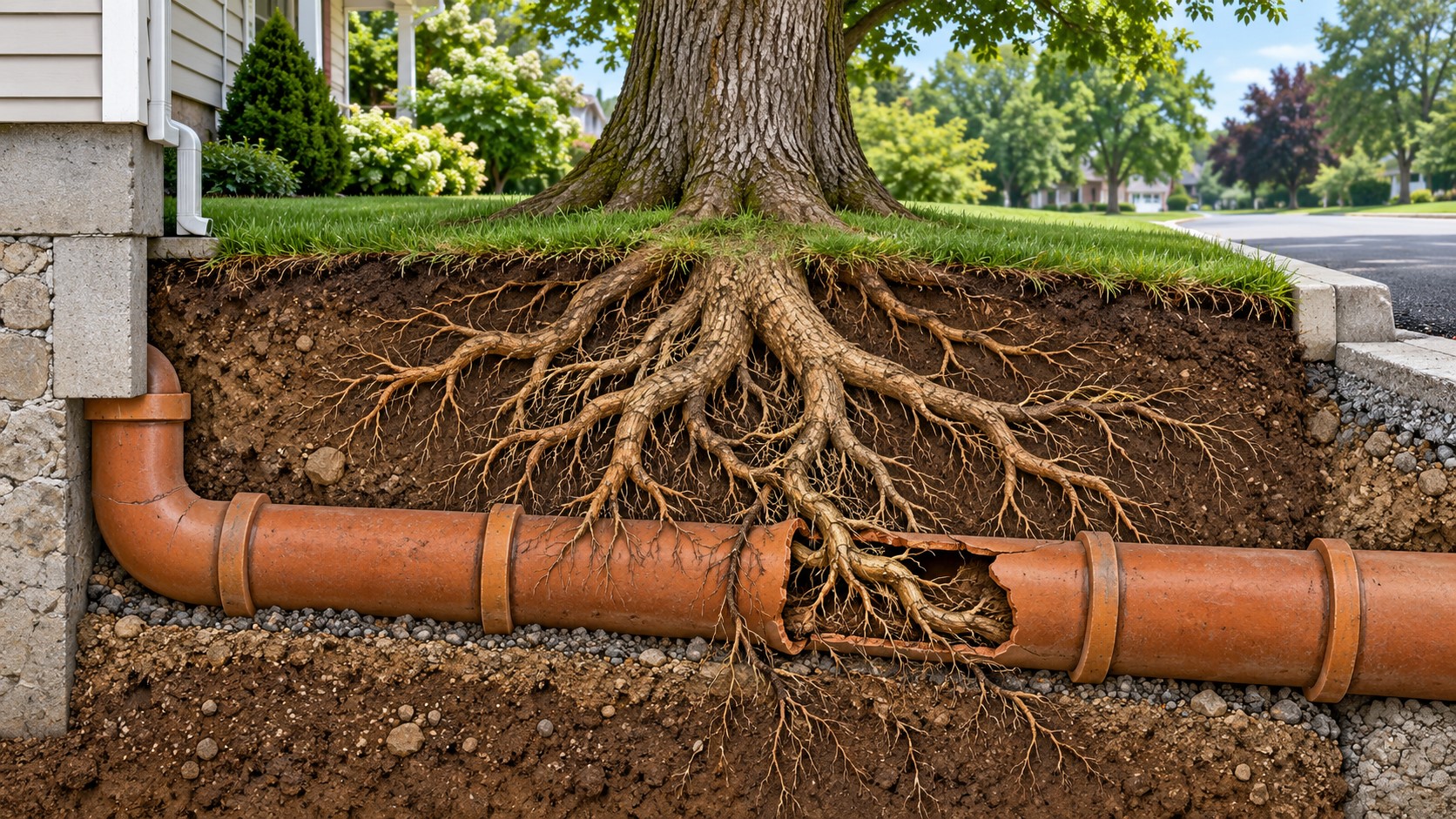
Tree roots don’t automatically damage every nearby sewer line, but they can enter through cracks, joints, or other openings in a defective pipe. The EPA identifies root intrusion through sewer defects as one cause of blockages. The key question isn’t whether a tree is nearby. It’s whether roots have actually gotten into the pipe. A camera inspection can show that.
7. A Wet, Sunken, or Soft Area in the Yard
A damaged sewer line can leak wastewater into the surrounding soil. You might notice a persistently damp area, soft ground, settling, or a depression along the sewer line’s path. Not every wet spot is a sewer leak. Irrigation, stormwater, a water-supply leak, or drainage problems can look similar. But a new wet or sunken area combined with odors or indoor drain problems deserves a professional look.
8. A Patch of Grass Grows Differently
Unusually green or fast-growing grass over a wastewater line can sometimes accompany a leak, since wastewater adds moisture and nutrients. This sign is more common with septic systems and is weak evidence on its own. Treat it as a supporting clue, not a diagnosis.
9. You See or Smell Sewage Outside
Visible wastewater on the ground, or sewage coming from a cleanout or low area, needs prompt attention. Sewage can contain bacteria, viruses, and other disease-causing organisms. Keep children and pets away, avoid contact, and contact a qualified plumber or your local utility. If you’re not sure whether the problem is on your line or the public main, your utility may be able to help figure out which side is affected.
Local Drain Clog or Main Sewer Problem?

This pattern can help you judge what’s more likely. It isn’t a substitute for an inspection.
| What You’re Seeing | What It May Point To |
|---|---|
| One fixture is slow or blocked | A local clog in that fixture or branch drain is often more likely |
| Several fixtures are slow or gurgling | A blockage in the main drain or sewer line becomes more likely |
| Water comes up in a lower drain when another fixture is used | A downstream blockage that needs prompt evaluation |
| The main line has needed repeated cleaning | Possible roots, structural damage, or another recurring cause |
| Neighbors have backups at the same time | Possibly a public sewer problem; contact your local utility too |
What Causes Sewer Line Problems?
Warning signs tell you something may be wrong, not exactly why. Common causes include grease or debris buildup, items that shouldn’t have been flushed, root intrusion through pipe defects, separated or offset joints, cracks, corrosion in some older pipes, pipe deformation, or a collapsed section. Ground movement, age, poor original installation, and nearby construction can also play a role. The cause matters: a clog that can be cleaned is very different from a failed pipe that needs repair or replacement.
How a Sewer Line Problem Is Confirmed
A plumber or sewer contractor will usually start by figuring out whether the blockage is in one fixture, a larger drain inside the house, or the sewer lateral. From there, a video camera inspection is the most common way to see inside the line. Seattle Public Utilities specifically recommends hiring a plumber or sewer inspector who can run a camera through the line, and DC Water notes that a TV inspection can help determine whether a lateral is clogged or collapsed.
A camera can reveal roots, debris, breaks, holes, displaced joints, or sags, and help locate the problem so repair discussions are based on something more specific than “the sewer keeps clogging.”
What Might Sewer Line Repairs Cost?
The fix, and the price, depends on what the inspection finds. These national ranges from HomeGuide and Angi can help you understand what you may be quoted:
| Service | Typical Cost |
|---|---|
| Sewer camera inspection | $100 – $500 |
| Snaking / clearing a main line clog | $150 – $600 |
| Hydro jetting | $250 – $800 |
| Root removal | $100 – $600 |
| Spot repair of a cracked section | $600 – $1,050 |
| Sewer line replacement | $50 – $250 per linear foot |
National planning figures. Depth, access, and restoration can change costs significantly.
Many problems are clogs that can be cleared for a few hundred dollars. Structural damage that needs a section or the whole line replaced can cost thousands. For a full breakdown of replacement methods and prices, see our guide to sewer line replacement cost.
Facing a Sewer Repair Quote?
Our free Before You Hire Home Repair Cost Checklist helps you compare plumbing and sewer estimates, spot missing items like restoration and permits, and ask the right questions before you sign.
Questions to Ask After a Sewer Camera Inspection
- Can you show me the part of the video where the problem appears?
- What exactly do you see: roots, grease, a crack, a hole, an offset joint, a sag, or a collapse?
- Where is the problem relative to the house, property line, and public sewer?
- Will cleaning likely solve it, or is there structural damage that needs repair?
- Can just the damaged section be repaired, or are you recommending a longer replacement? Why?
- Are trenchless methods possible here, or would digging be required?
- What restoration work is included if digging is needed?
- Do local permits or utility coordination apply?
When to Treat It as Urgent
Get prompt help, rather than continuing to use your plumbing normally, when:
- Raw sewage is backing up into the house
- Several fixtures suddenly stop draining
- Wastewater is surfacing outside
- A lower-level drain backs up whenever water is used elsewhere
- A strong sewage odor comes with active drainage problems
- The backup is near electrical equipment or creates another safety concern
Safety note: Avoid direct contact with sewage. The EPA notes that untreated sewage can
carry harmful pathogens, and many utilities recommend limiting water use during an active backup so you don’t send more
wastewater into a blocked line.
What Not to Assume
- Not every slow drain means you need a new sewer line. Many drainage problems are clogs that can be cleared.
- Repeated cleaning doesn’t prove the pipe is healthy. If problems keep returning, ask whether the underlying cause has been found.
- Don’t approve a major replacement based on a vague “the pipe is bad.” Ask what was found, where, and why the recommended repair fits.
Does Homeowners Insurance Cover Sewer Line Problems?
Often, no. Standard homeowners policies typically don’t cover sewer line damage from age, wear and tear, or tree roots. Some insurers offer optional service line coverage for buried lines, and separate sewer backup coverage may help with damage inside your home from a backup, though usually not the pipe repair itself. Check your policy or ask your agent.
Sewer Line Problems: Frequently Asked Questions
How do I know if it’s a clog or a broken sewer line?
A single slow fixture usually points to a local clog. Multiple slow drains, backups in low drains, or clogs that keep returning suggest a main line issue. A camera inspection is the most reliable way to tell a clog from structural damage.
Can I use chemical drain cleaner for a sewer line clog?
Chemical cleaners are aimed at small fixture clogs and are unlikely to clear a main sewer line blockage. If several drains are affected, it’s better to have a professional evaluate the main line.
Why does my toilet gurgle when the washing machine drains?
That can happen when air is forced through the plumbing because water can’t flow freely downstream. It may point to a restriction in a shared drain or the sewer line, or a venting issue. A plumber can determine which.
Who do I call for a sewer line problem?
Start with a licensed plumber or sewer contractor who can clear the line and perform a camera inspection. If neighbors are having backups too, contact your local sewer utility as well.
The Bottom Line
The strongest warning signs of a sewer line problem are usually patterns: multiple slow drains, recurring main-line clogs, gurgling across fixtures, sewage backups, or signs of wastewater outside. Those symptoms don’t automatically mean the whole line needs replacing. They mean the system should be evaluated so the real cause can be found.
If sewage is backing into your home, reduce water use, avoid contact, and get professional help promptly. If the problem is recurring rather than urgent, a camera inspection gives you solid evidence before you make a major repair decision.
Get the Free Before You Hire Checklist
Download our free Before You Hire Home Repair Cost Checklist. Use it to compare sewer and plumbing quotes and avoid costly surprises.
Sources
- Seattle Public Utilities: Side Sewer Maintenance
- Seattle Public Utilities: Side Sewer Defects & Issues
- DC Water: Know What to Do if You Have a Sewer Backup
- U.S. EPA: Sanitary Sewer Overflow Frequent Questions
- U.S. EPA: Resolving Septic System Malfunctions
- Austin Water: Private Lateral Program
- HomeGuide: Sewer Line Repair Cost
- Angi: Sewer Line Replacement Cost (2026 Data)
House Care
Compass provides general educational information to help homeowners better understand repair and replacement decisions.
It does not diagnose specific problems. For advice about your specific home or project, consult an appropriately qualified
professional.
Roof Leak Repair: Possible Causes, Warning Signs, and What to Do Next

Last updated: September 2026
A roof leak can start as a small ceiling stain and turn into a much bigger problem if water keeps getting in. The tricky part is that where you see water inside isn’t always directly below where it entered the roof. Water can travel along roof decking, rafters, insulation, or pipes before it shows up on a ceiling or wall.
This guide covers the most common causes of roof leaks, the warning signs to watch for, what to do right away, and what a repair may cost.
Quick Answer: What to Do About a Roof Leak
- Protect the inside first. Move belongings, catch drips, and stay away from wet areas near electrical fixtures.
- Document it. Take photos and note when the leak happens (every rain, only heavy or wind-driven rain).
- Don’t climb on the roof. Look from the ground, and check the attic only if it’s safe to do so.
- Have the source evaluated. The stain you see may be several feet from where water is getting in.
- Know the likely cost: many leak repairs run about $150 to $1,200, while large leaks with decking or interior damage can reach $3,000 or more (HomeGuide).
Common Causes of Roof Leaks
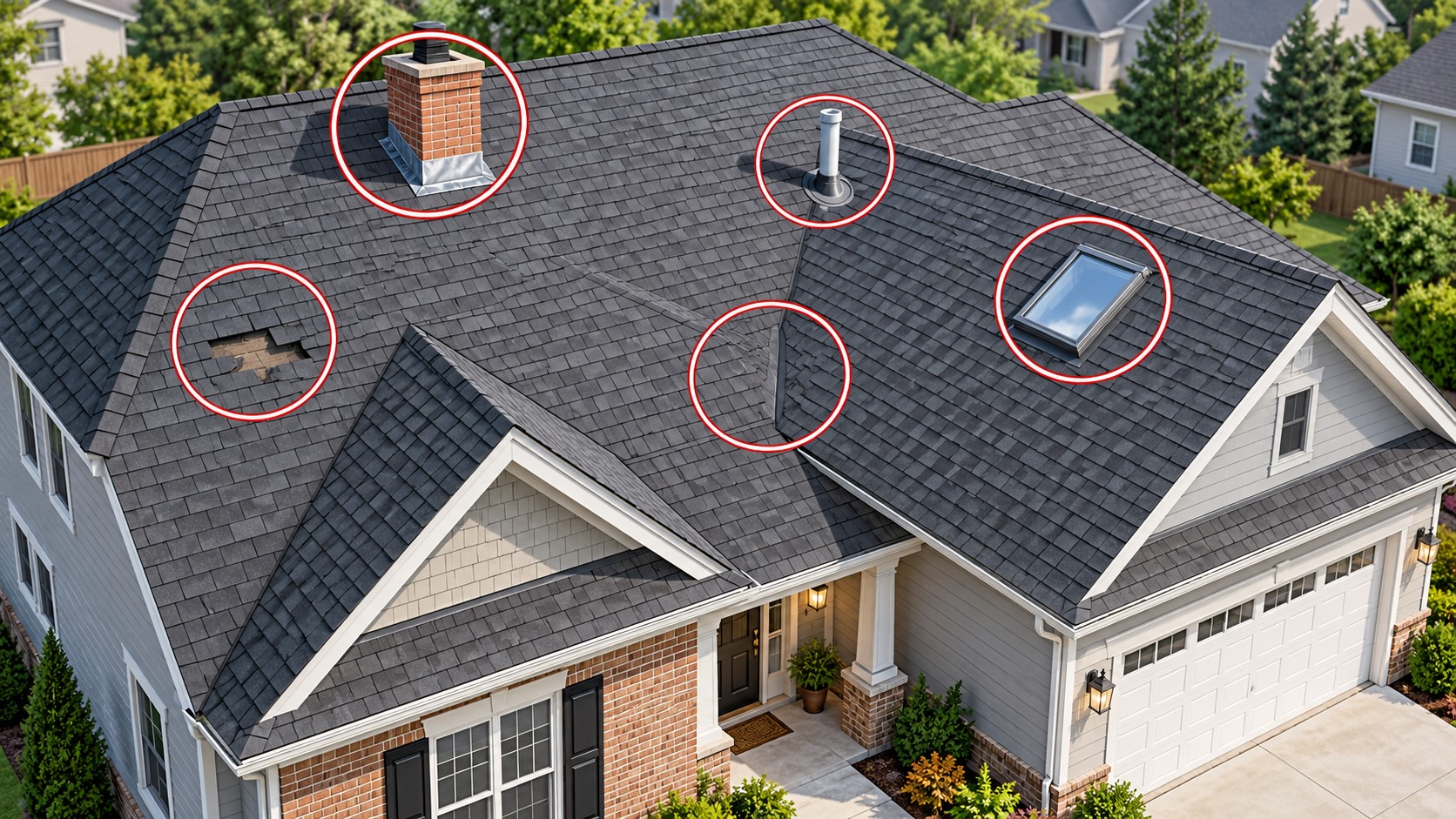
Roof leaks usually start where roofing materials are damaged, worn, or interrupted by something that passes through the roof. These are the most common trouble spots:
- Damaged or missing shingles. Cracked, curled, torn, or missing shingles expose the layers underneath to wind-driven rain. Smaller defects can be hard to see from the ground.
- Failed flashing. Flashing is the metal or waterproofing material where the roof meets walls, chimneys, skylights, and vents. When it loosens, corrodes, cracks, or was installed incorrectly, water can get in at those joints.
- Vents, pipes, chimneys, and skylights. Every opening in the roof has to shed water correctly. Cracked rubber pipe boots, worn sealant, or damaged flashing around these spots are frequent leak sources.
- Roof valleys. Valleys carry a lot of runoff where two roof slopes meet. Damage, debris, or poor installation there can create a leak path.
- Wind, hail, or storm damage. Wind can lift or tear off shingles and flashing. Hail and falling branches can cause damage that isn’t obvious from the yard.
- Aging materials. As roofing weathers, shingles may crack, lose granules, or turn brittle, and older sealants and flashing can break down.
- A moisture source that isn’t the roof. Not every ceiling stain is a roof leak. Plumbing leaks, HVAC condensation, bathroom exhaust problems, or attic condensation can look similar.
Warning Signs You May Have a Roof Leak
A leak is sometimes obvious during a storm, but many show up through secondary signs first. Watch for:
- Brown, yellow, or gray stains on ceilings or upper walls
- Bubbling, peeling, or blistering paint or drywall
- Damp insulation or visible moisture in the attic
- Dark staining on roof decking or rafters
- A musty odor in the attic or an upstairs room
- Dripping water during or shortly after rain
- Missing, cracked, or lifted shingles visible from the ground
- Damaged flashing or gaps around a chimney, skylight, vent, or pipe
- Sagging or softened ceiling material
The U.S. Environmental Protection Agency advises homeowners not to ignore wet spots or water stains, and to fix moisture problems promptly. Wet materials should be dried quickly, because ongoing moisture can lead to mold and damage building materials.
What to Do When You First Notice a Roof Leak
1. Protect the Interior
If water is actively dripping, move furniture, electronics, and rugs away from the area if you can do so safely. Use a bucket or container to catch drips, and protect nearby floors and finishes.
2. Document What You See
Photograph stains, drips, damaged finishes, and any exterior damage you can safely see from the ground. Note whether the leak happens during every rain, only heavy rain, or only wind-driven rain from a certain direction. That information can help a roofer narrow down the source, and photos can help if you file an insurance claim.
3. Check the Attic Only If It’s Safe
If you can get into the attic safely, look for damp insulation, water stains, wet decking, or signs that water has traveled along the framing. Use good lighting, stay on the joists or a walkway, and never step onto insulation or drywall between joists.
4. Get the Leak Evaluated
A qualified roofer can check likely entry points and tell you whether the problem is one localized spot or part of a broader roofing issue. If the leak is active or the ceiling is sagging, treat it as urgent. If a permanent repair can’t happen right away, ask about emergency tarping, which HomeGuide puts at roughly $175 to $700.
Don’t Assume the Ceiling Stain Shows Where the Roof Is Leaking

One of the most confusing parts of roof leak repair is that water moves. Rain can enter around flashing or a vent, run along the underside of the roof deck or a rafter, and then drip several feet away from where it came in. Insulation can also soak up and spread moisture.
That’s why simply patching the roof directly above a ceiling stain can miss the real problem. Finding the source may require examining the roof surface together with the attic or underside of the roof deck.
Why an Attic Inspection Helps
When attic access is safe and practical, the underside of the roof can show valuable evidence: moisture stains, damp insulation, darkened decking, ventilation problems, or water tracks that point to the leak’s path. It won’t reveal every hidden defect, though. Some damaged decking isn’t visible until shingles and underlayment are removed.
Ask your roofer whether they’ll check the attic or underside of the roof deck if it’s safely accessible, and how any hidden decking damage will be handled and priced if they find it.
When a Roof Leak Needs Urgent Attention
Call for professional help right away if:
- Water is coming in near light fixtures, wiring, or an electrical panel
- The ceiling is bulging, sagging, or heavily saturated
- Water is coming in over a large area rather than one spot
- The leak started after major wind, hail, or a falling tree
- You see a sagging roof area or damaged framing
- The leak keeps coming back after previous repairs
Safety note: If water is near electrical equipment or you’re unsure whether an area is
safe, stay out of the wet area and get professional help. Water and electricity are a dangerous combination.
What Does Roof Leak Repair Cost?
Cost depends on what’s causing the leak and how far the water has spread. HomeGuide’s national data breaks leak repairs down by severity:
| Leak Severity | Typical Repair Cost |
|---|---|
| Small leak, limited damage | $150 – $500 |
| Average leak | $500 – $1,200 |
| Large leak or multiple entry points | $1,200 – $3,000 |
| Emergency tarping (temporary) | $175 – $700 |
Source: HomeGuide national cost data. Repairs to drywall, insulation, or framing inside the home are usually extra.
A simple fix like replacing a cracked pipe boot or resealing flashing is often at the low end. Leaks that have soaked the decking or damaged ceilings cost more. For a full breakdown of shingle, flashing, and decking repair prices, see our guide to roof repair cost. If the roof is older and leaking in several places, compare repair quotes with our guide to roof replacement cost.
Hiring a Roofer? Don’t Go In Blind
Our free Before You Hire Home Repair Cost Checklist helps you compare roofing estimates, spot missing line items, and ask the right questions before you approve a repair.
Should You Get on the Roof to Find the Leak?
Usually, no. A wet or storm-damaged roof is a dangerous place for an untrained homeowner. Roof work carries serious fall risk, and even professional roofers are required to plan for fall protection. From the ground, you may be able to spot missing shingles, displaced flashing, or fallen branches without climbing up. If the roof is steep, wet, icy, or damaged, leave the roof-level inspection to someone trained and equipped to do it safely.
Can a Roof Leak Cause Mold or Interior Damage?
Yes. A roof leak can soak insulation, drywall, wood framing, and ceilings. The EPA identifies moisture control as the key to preventing indoor mold and recommends drying wet or damp materials within about 24 to 48 hours when possible. The longer water keeps coming in, the more likely repairs will expand beyond the roof itself.
Fixing the visible stain without stopping the water source doesn’t solve the problem.
Will Homeowners Insurance Cover a Roof Leak?
It depends on the cause. Insurance may help when a leak results from a sudden, covered event such as wind, hail, or a fallen tree. It typically doesn’t cover leaks caused by age, wear and tear, or lack of maintenance. If storm damage may be involved, take photos, prevent further damage if you can do so safely, and contact your insurer before permanent repairs begin.
Questions to Ask About a Roof Leak Repair
- Where do you believe the water is getting in, and what evidence points there?
- Is this one localized problem, or are there signs of broader roof wear?
- Will you check the attic or underside of the roof deck if it’s safely accessible?
- Do you see moisture staining, ventilation problems, or decking damage?
- Could hidden decking damage show up once shingles are removed?
- If hidden damage is found, how will extra work be priced?
- Which roofing materials and flashing will be repaired or replaced?
- Is this a permanent repair or a temporary fix?
- What warranty applies to the repair?
Repairing the Leak Is Only Part of the Job
A complete roof leak repair has two parts: stop the water from getting in, and deal with the moisture that already got in. Once the roof is fixed, wet insulation, drywall, or ceilings may still need drying, repair, or replacement depending on how much water came in and how long it stayed wet.
If the same area has leaked more than once, ask whether previous repairs fixed the actual entry point or only the visible symptom.
Roof Leak Repair: Frequently Asked Questions
Can a roof leak be fixed from the inside?
Not permanently. You can catch drips and protect belongings from inside, but the actual repair has to happen where water enters the roof.
Why does my roof only leak in heavy rain?
Leaks that appear only in heavy or wind-driven rain often point to flashing, vents, valleys, or lifted shingles that let water in only when it’s pushed sideways or runoff is heavy. Note the conditions and share them with your roofer.
Is a roof leak an emergency?
An active leak near electrical fixtures, a sagging ceiling, or widespread water intrusion should be treated as urgent. A small, old stain that isn’t growing is less urgent but should still be checked soon.
Does a leak mean I need a new roof?
Not necessarily. Many leaks come from one failed spot, like flashing or a pipe boot, and can be repaired. Multiple leaks on an aging roof may make replacement worth comparing.
The Bottom Line
A roof leak is a symptom, not a diagnosis. Missing shingles may be the cause, but so can failed flashing, roof openings, storm damage, aging materials, drainage problems, or even a moisture source that isn’t the roof at all.
Protect the interior, document the damage, skip the ladder, and have the source evaluated before assuming you know where the water is coming in. Catching a leak early can limit how much roofing and interior repair you’ll need later.
Get the Free Before You Hire Checklist
Download our free Before You Hire Home Repair Cost Checklist. Use it to compare roofer quotes, catch missing line items, and avoid costly surprises.
Sources
- GAF: How to Identify and Repair Roof Leaks
- GAF: How to Identify Roof Damage
- U.S. EPA: A Brief Guide to Mold, Moisture and Your Home
- U.S. EPA: Mold Course, Chapter 9 (Prevention)
- U.S. OSHA: Fall Prevention Resources
- HomeGuide: Roof Shingle Repair Cost
House Care
Compass provides general educational information to help homeowners better understand repair and replacement decisions.
It does not diagnose specific problems. For advice about your specific home or project, consult an appropriately qualified
professional.