
Last updated: September 2026
When a roofer tells you there’s damage, the next question is often harder than the diagnosis: should you repair the roof or replace it? There’s no single age, dollar amount, or percentage that decides it for every house. The better approach is to weigh the roof’s age and condition, how much of it is affected, its repair history, the chance of hidden damage, and how a repair compares with a replacement that solves the bigger problem.
Quick Answer: Repair or Replace Your Roof?
- Repair usually makes sense when damage is localized, the roof is relatively young (GAF uses about 15 years as a guide for asphalt), matching materials are available, and the rest of the roof is sound.
- Replacement becomes more reasonable when damage is widespread, leaks keep coming back, shingles are brittle, curling, or bald across the roof, decking or structure is involved, or the roof is well into its service life.
- For scale: Angi’s 2026 data puts the average roof repair around $1,173 and the average full replacement around $9,600.
- Don’t decide on price alone. Compare what the repair actually fixes, how much roof life it preserves, and whether another major repair is close behind.
Repair vs. Replace at a Glance
| Factor | Points Toward Repair | Points Toward Replacement |
|---|---|---|
| Extent of damage | Small, localized area | Multiple slopes or large areas |
| Roof age | Relatively young for its material | Near or past expected lifespan |
| Repair history | Few or no past repairs | Repeated repairs in different spots |
| Shingle condition | Surrounding shingles healthy | Widespread curling, cracking, granule loss |
| Leaks | One isolated leak with a clear source | Several unrelated leaks |
| Decking / structure | Sound in accessible areas | Soft, rotted, or sagging decking |
| Matching | Compatible material available | Discontinued or badly weathered material |

Start With the Extent of the Damage
The most useful question is whether the problem is isolated or widespread. A few missing shingles, a localized flashing failure, or a small storm-damaged area may be repairable when the surrounding roof is in good shape. GAF’s homeowner guidance makes the same distinction: small, localized damage may be appropriate for repair, while significant or widespread problems are more likely to justify replacement.
Widespread curled, cracked, brittle, or worn shingles point to a different problem than one damaged section. In that case, patching one spot may stop today’s leak without changing the overall condition of the roof.
How Old Is the Roof?
The same defect means something different on a newer roof than on an older one. GAF’s guidance says that if an asphalt roof is under about 15 years old with smaller signs of damage, repairing it can be a smart choice because it still has life left. An older roof with broader deterioration is a stronger replacement candidate.
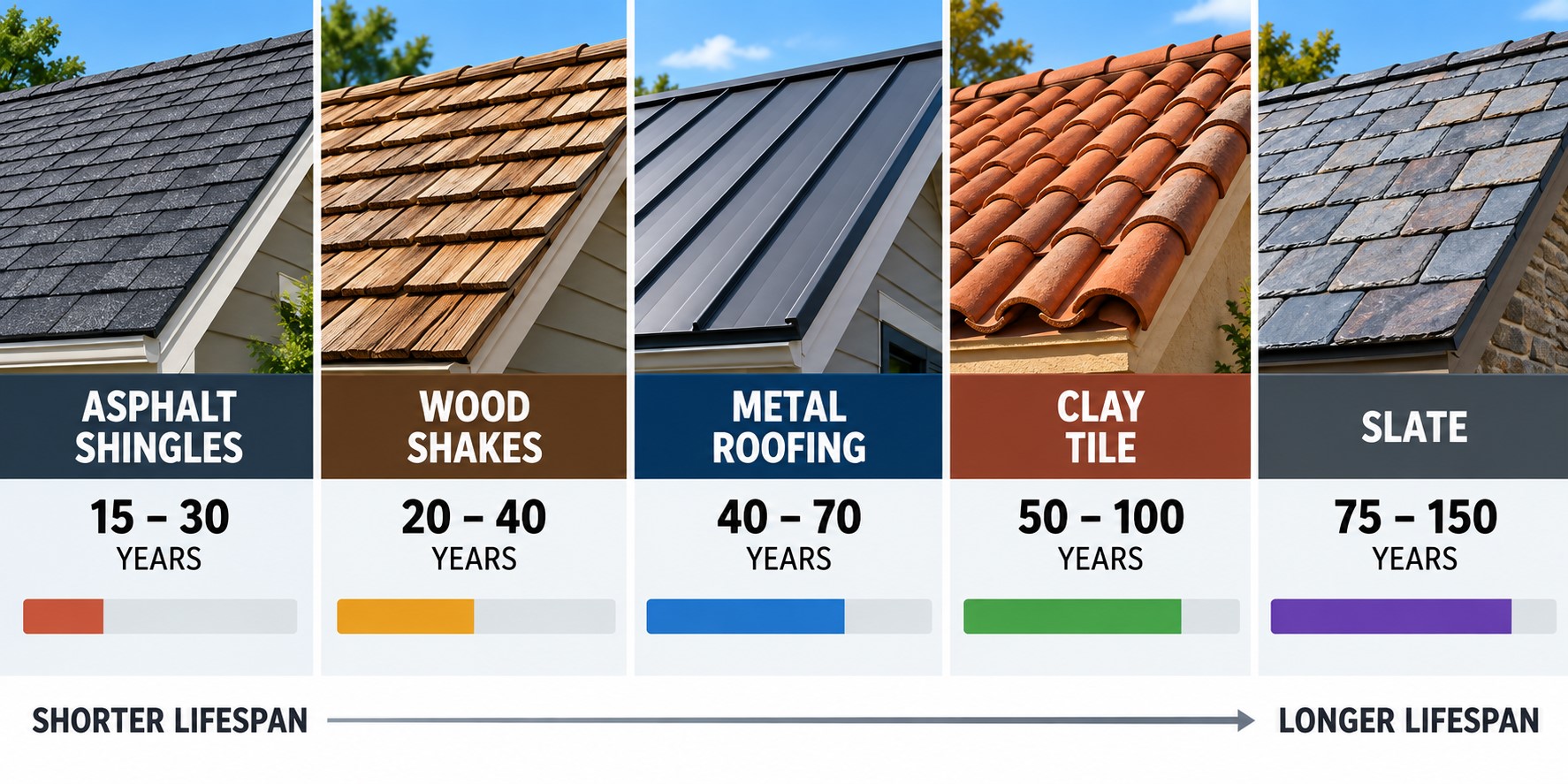
That’s a guideline, not an expiration date. Typical lifespans vary a lot by material:
| Roofing Material | Typical Lifespan |
|---|---|
| Asphalt shingles | 15 – 30 years |
| Wood shakes | 20 – 40 years |
| Metal | 40 – 70 years |
| Clay / concrete tile | 50 – 100 years |
| Natural slate | 75 – 150+ years |
Climate, installation quality, ventilation, maintenance, and storm exposure all affect how a particular roof ages. If you don’t know your roof’s age, check old invoices, permits, or seller disclosures, or ask a roofer whether the materials offer clues.
Has the Roof Needed Repeated Repairs?
One repair doesn’t make a roof a bad roof. Repeated repairs in different areas matter more. If you’ve already paid to fix several leaks, flashing failures, or storm-damaged sections, another repair deserves a bigger question: are you fixing isolated events, or paying again and again to extend a roof that’s failing in multiple places?
Ask the roofer for a list of known repair areas and whether the current problem is related to old work or is happening somewhere new.
What Kind of Damage Are You Dealing With?
- A few damaged shingles: often repairable if the surrounding roof is sound and matching shingles are available.
- Localized flashing problems: flashing around chimneys, skylights, walls, or vents can often be repaired without replacing the whole roof.
- One isolated leak: usually repairable once the true entry point is found. The ceiling stain isn’t always directly below it. (See our guide to roof leak repair.)
- Widespread shingle deterioration: broad curling, cracking, brittleness, or granule loss suggests roof-wide aging, not one defect.
- Multiple active leaks: leaks in several unrelated areas make spot repairs less attractive.
- Sagging or structural movement: can signal a more serious structural issue and deserves prompt professional evaluation.
- Decking deterioration: soft, rotted, or delaminated decking expands the job beyond the surface roofing.
- Large storm-damaged areas: when wind or hail affects several slopes, comparing against a replacement quote makes more sense than pricing one patch at a time.
Compare Repair Cost With Replacement Cost, the Right Way
National data shows how different the two price scales are. Angi reports an average roof repair of about $1,173, with many repairs between $395 and $1,967, and an average full replacement around $9,609. For more detail, see our guides to roof repair cost and roof replacement cost.
Those averages are only context. A $1,000 repair on a healthy roof may be an easy call. A $4,000 repair on an older roof with other worn areas is a different calculation. Compare your repair quote with an actual replacement estimate for your roof, using the material and scope you’d realistically choose, not a national average. And compare what each includes: a replacement estimate may cover tear-off, underlayment, flashing, ventilation, disposal, and permits that a spot repair doesn’t.
Rules of Thumb: Useful, But Not the Final Word
You’ll hear shortcuts like these, including from roofing manufacturers:
- The 25% rule: GAF suggests that if repairs will cost more than about 25% of a new roof, replacement may be the better value.
- The 30% rule: if damage covers more than about 30% of the roof, repair costs can start approaching replacement.
These are good conversation starters, but they shouldn’t decide for you. A pricey repair on a relatively young specialty roof may still make sense. A cheap repair on an old roof with widespread wear may not. The better question is how much useful roof life the repair will preserve, and whether the rest of the roof is healthy enough to justify it.
Getting Repair and Replacement Quotes?
Our free Before You Hire Home Repair Cost Checklist helps you compare estimates side by side, spot missing line items, and ask the right questions before you decide.
What Will the Repair Actually Accomplish?
Before approving a repair, ask the roofer what problem the work is expected to solve. A good localized repair addresses a specific defect and restores that area. It’s less convincing when the roofer expects nearby sections to fail soon, or describes the work as temporary.
Ask whether the repair is meant to be permanent for that area, whether the surrounding materials are still serviceable, and what other problems they can already see. That helps separate a worthwhile repair from a short-term patch that only delays a bigger project.
Other Factors That Can Tip the Decision
Can the Repair Match the Existing Roof?
If your shingles or tiles have been discontinued or have weathered a lot, a repaired section may not match. Beyond looks, the roofer needs to confirm that available materials are technically compatible with your existing roof. If matching matters to you, ask to see the proposed material before approving the work.
What’s Happening Under the Shingles?
When the attic is safely accessible, the underside of the roof deck may show moisture stains, wet insulation, decking damage, ventilation problems, or water tracks. That inspection has limits, though. Some decking damage stays hidden until roofing is removed. If an estimate assumes the decking is sound, ask how unexpected damaged decking would be priced.
Is There a Ventilation or Moisture Problem?
A roof can fail early when an underlying moisture or ventilation problem isn’t addressed. GAF recommends checking attics for moisture, mold, mildew, and ventilation issues when evaluating roof problems. If a roofer recommends new shingles but doesn’t mention an obvious attic moisture or ventilation issue, ask whether it could shorten the life of the new roof.
Is Storm Damage Involved?
If the damage came from a sudden event like hail, wind, or a fallen tree, your homeowners insurance may cover part of the repair or replacement, minus your deductible. Insurance typically doesn’t cover wear and tear. Document the damage and contact your insurer before permanent work begins.
Should You Repair Before Selling the House?
A planned sale adds another layer. A documented, localized repair may be enough when the roof is otherwise serviceable. An aging roof with visible wear can still become a negotiation point even after one leak is fixed.
A new roof can help at resale. According to the 2025 Cost vs. Value Report, an asphalt shingle roof replacement recouped roughly two-thirds of its cost on average. But don’t assume you’ll get the full cost back. Base the decision on the roof’s condition, your timing, and local market expectations.
Questions to Ask a Roofer Before Deciding
- What specific damage did you find, and is it localized or widespread?
- How old do you believe the roof is, and how does that affect your recommendation?
- What condition are the surrounding shingles or roofing materials in?
- Has this roof been repaired in multiple areas before?
- Will you check the attic or underside of the roof deck if it’s safely accessible?
- Do you see moisture staining, ventilation issues, or decking problems?
- What will this repair fix, and how long do you expect it to last?
- Is this a permanent repair or a temporary measure?
- If I repair this area, what other problems are likely to need attention soon?
- Can you give me separate written estimates for repair and replacement?
- If hidden decking damage is found, how will it be priced?
- What warranties apply to each option?
When a Second Opinion Is Worth It
A second opinion is worth considering when one roofer recommends a small repair and another recommends a full replacement, especially when the price gap is several thousand dollars. Ask each to show the evidence behind their recommendation: photos, affected areas, signs of wear, attic findings, and any visible decking or flashing problems. Two roofers may still disagree, because roofing decisions involve judgment. The goal is to understand the facts behind each recommendation.
Don’t let an active leak wait while you decide. Repair-or-replace decisions take time,
but water coming in can cause more damage while you compare options. Ask your roofer about temporary protection, such as
tarping, and don’t climb onto a wet or damaged roof yourself.
Repair or Replace: Frequently Asked Questions
How do I know if my roof needs to be replaced?
Common signs include widespread curling, cracking, or missing shingles, heavy granule loss, multiple leaks, sagging, and an asphalt roof that’s 20 years old or more. A qualified roofer can confirm whether the problem is roof-wide.
Is it cheaper to repair or replace a roof?
A repair is almost always cheaper upfront. Replacement can be the better value when repairs keep adding up or the roof is near the end of its life.
Can you replace just part of a roof?
Sometimes a single section or slope can be replaced, but matching, warranty, and how the new section ties into the old roof all matter. Ask your roofer to explain the pros and cons for your roof.
How long will a roof repair last?
A good repair on a healthy roof can last for years. On an aging roof, a repair may only hold until the next weak spot fails. Ask the roofer how long they expect the repaired area to remain serviceable.
The Bottom Line: Repair or Replace Your Roof?
Repair is usually easier to justify when the damage is small, the roof is relatively young, the surrounding materials are healthy, and the work solves a clearly defined problem. Replacement becomes more reasonable when wear is widespread, repairs keep repeating, the roof is aging, or a large repair would leave you with an expensive fix on an old roof.
Don’t let one rule, one age, or one percentage decide for you. Compare the condition of the whole roof, what each option accomplishes, the actual written costs, and how confident each option makes you that the roof will stay reliable. A good roofer should be able to explain why their recommendation fits your roof, not just that one option costs more.
Get the Free Before You Hire Checklist
Download our free Before You Hire Home Repair Cost Checklist. Use it to compare repair and replacement quotes and ask the right questions before you commit.
Sources
- GAF: How Do I Know if My Roof Needs to Be Replaced?
- GAF: Should You Repair or Replace Your Roof?
- GAF: How to Identify Roof Damage
- Angi: How Much Does Roof Repair Cost? (2026 Data)
- Angi: How Much Does Roof Replacement Cost? (2026 Data)
House Care
Compass provides general educational information to help homeowners better understand repair and replacement decisions.
It does not inspect or diagnose specific roofs. For advice about your specific home or project, consult an appropriately
qualified professional.